
Light Source
Light Source
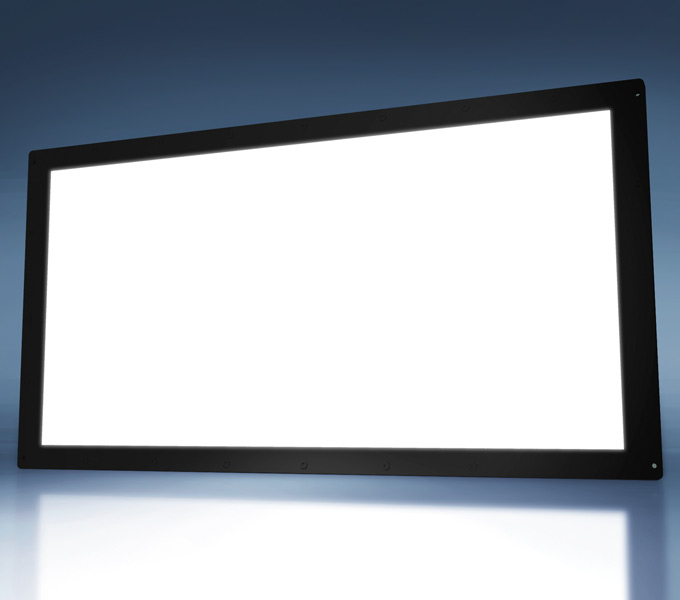
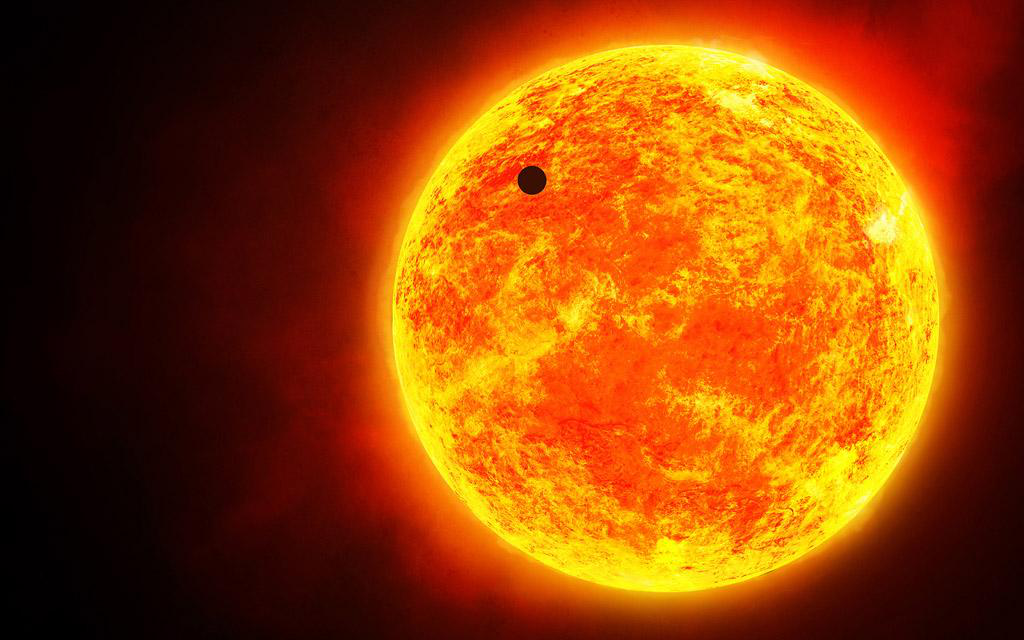
A light source is a term in physics. In the universe, some objects emit light, while others do not. We call objects that can emit light and are currently emitting light "light sources." The sun, turned-on light bulbs, burning candles, etc., are all light sources.
Specific Meaning
In Physics: Refers to objects capable of emitting electromagnetic waves within a certain wavelength range (including visible light, ultraviolet light, infrared light, X-rays, etc.). It usually refers to illuminating bodies capable of emitting visible light. Objects capable of emitting light by themselves are called light sources, also known as luminous bodies. Examples include the sun, stars, lamps, and burning substances.
However, objects like the moon's surface and tables rely on reflecting external light to be visible to people. Such reflective objects cannot be called light sources. In our daily lives, we rely on light sources that emit visible light. Both visible and invisible light sources are widely used in industry, agriculture, medicine, national defense modernization, and other fields.
Classification
Light sources can be divided into natural (organic) light sources and artificial light sources. Additionally, according to the direction of light propagation, light sources can be classified as point sources and parallel sources.
Historical Origins
At the end of the 18th century, human research on electric light sources began.
In the early 19th century, H. Davy in the UK invented the carbon arc lamp.
In 1879, T.A. Edison of the United States invented the practical incandescent lamp, ushering humanity into the era of electric lighting from the long era of fire lighting.
In 1907, tungsten wire drawn as a filament was used in incandescent lamps.
In 1912, researchers in the United States improved the efficiency and lifespan of incandescent lamps by studying gas-filled incandescent lamps, expanding the application range of incandescent lamps.
In the early 1930s, low-pressure sodium lamps were successfully developed.
In 1938, fluorescent lamps were developed in Europe and the United States, with luminous efficiency and lifespan more than three times that of incandescent lamps, marking a major breakthrough in electric light source technology.
In the 1940s, high-pressure mercury lamps entered the practical stage.
In the late 1950s, halogen tungsten lamps with minimal volume and light decay were introduced, changing the stagnation of progress in thermal radiation light source technology, marking another major breakthrough in electric light source technology.
In the 1960s, metal halide lamps and high-pressure sodium lamps were developed, with much higher luminous efficiency than high-pressure mercury lamps.
In the 1980s, compact and energy-saving fluorescent lamps, low-power high-pressure sodium lamps, and low-power metal halide lamps appeared, ushering in a new era of miniaturization, energy saving, and electronization of electric light sources.
Generation Methods
-
Thermal Effect: Light generated by thermal effects. Sunlight is a good example, and items like candles behave similarly. The color of such light changes with temperature.
-
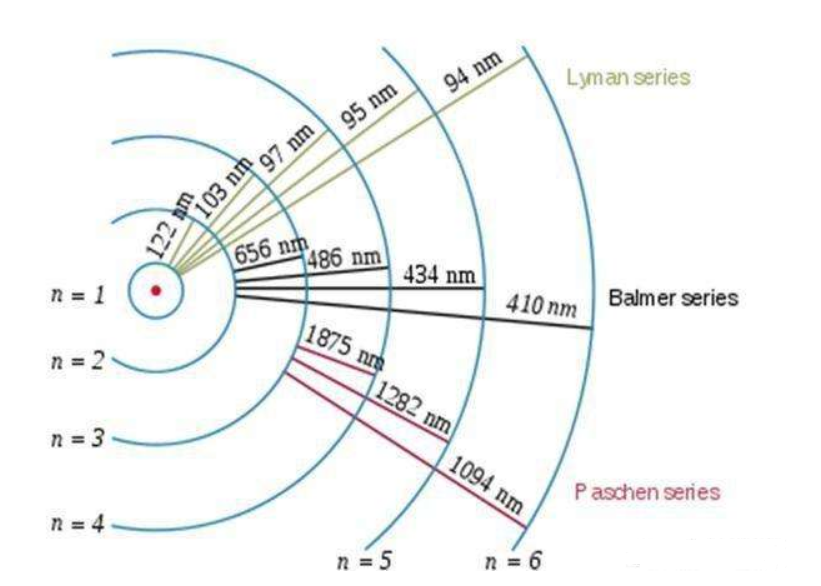
Atomic Transition: Light generated by atomic transitions. Fluorescent materials coated on the inner wall of a fluorescent lamp are excited by electromagnetic wave energy to produce light. The principle of neon lights is similar. Atomic emission has unique characteristic spectral lines. Scientists often use this principle to identify the types of elements.
-
Radiation Luminescence: Light generated by the accelerated movement of charged particles inside a substance. For example, synchrotron radiation emitted when a synchrotron accelerator is operating, which carries powerful energy.
Additionally, the faint blue light emitted by nuclear reactors (Cherenkov radiation) also belongs to this category. Cherenkov radiation refers to the phenomenon where charged particles may exceed the speed of light in the medium and radiate under such circumstances, similar to a "sonic boom."
Note: This is not true superluminal speed; true superluminal speed refers to exceeding the speed of light in a vacuum. This phenomenon is called the Cherenkov effect.
Main Types
-
Illumination Light Sources: These light sources radiate mainly visible light spectrum (wavelength 380 to 780 nm) for the purpose of illumination. There are various specifications, ranging in power from 0.1W to 20kW, accounting for more than 95% of the total output of electric light sources.
- Thermal radiation light sources
- Gas discharge light sources
- Electroluminescent light sources
-
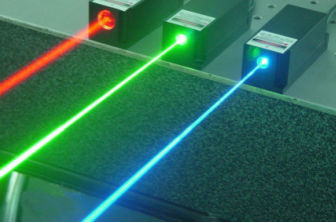
Radiation Light Sources: These light sources do not aim for illumination but radiate a large amount of ultraviolet spectrum (1 to 380 nm) and infrared spectrum (780 to 1 × 10⁶ nm). They include ultraviolet light sources, infrared light sources, and visible light sources for non-illumination use. Both categories of light sources are non-coherent light sources. Additionally, there is a type of coherent light source that emits light waves ranging from short-wave ultraviolet to far infrared by exciting particles in the excited state under stimulated radiation. This type of light source is called a laser light source.
Stable Light Source
In fiber optic communication technology, for measuring fiber attenuation, connection loss, active connector loss, and sensitivity of photoelectric devices or optical receivers, a stable light source is indispensable as a signal source.
A stable light source, whose output characteristics such as optical power, wavelength, and spectral width (mainly optical power) should remain stable. Of course, absolute stability is impossible; it's just that under given conditions (such as a certain environment, within a certain time range), its characteristics are relatively stable. To meet certain requirements, stable light sources should have certain measures to ensure the stability of their characteristics. Generally, measures such as APC (Automatic Power Control) circuits and ATC (Automatic Temperature Control) circuits are adopted.
Structural Composition
Different types of electric light sources have different structures, but generally, they consist of the following components:
- Filaments, electrodes, and fluorescent powders as luminous bodies
- Glass, semi-transparent ceramic tubes, and quartz tubes as outer shells of luminous bodies
- Lead wires, core pillars, and lamp holders as leads
- Various gases, mercury, metals, and their halides as fillers
- Deoxidizers, various coatings, insulating components, and adhesives
Common Devices
-
Carbon Arc Lamp: An electric light source that emits light by generating a discharge arc when two contacting carbon rod electrodes are energized in the air. The carbon arc lamp was invented by H. Davy of the UK in 1809.
-
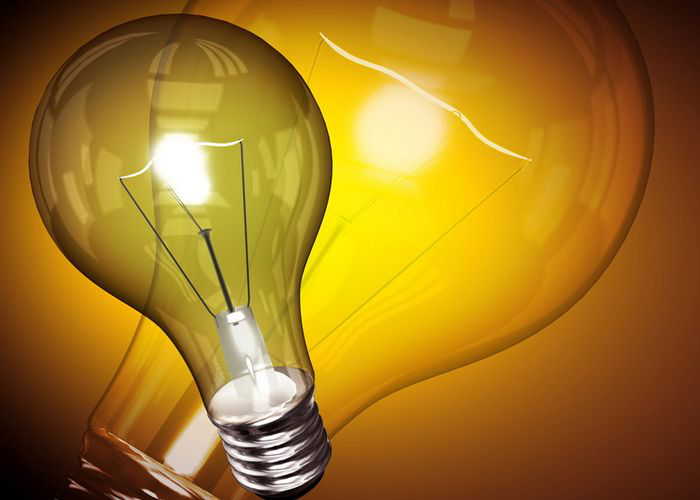
Incandescent Lamp: Also known as a tungsten lamp or bulb, it heats the filament to incandescence and emits visible light by thermal radiation. It is one of the earliest electric lamps. The incandescent lamp is made of heat-resistant glass and contains a tungsten filament. The bulb is evacuated to prevent oxidation of the filament or filled with an inert gas (such as argon) to reduce tungsten evaporation. Since only a small part of the electric energy consumed by the filament is converted into visible light, the luminous efficiency is low, generally 10 to 15 lumens per watt. However, it is easy to manufacture and low in cost.
-
Low-Pressure Sodium Lamp: An electric light source that emits light by low-pressure sodium vapor discharge. It has a glass outer shell coated with an infrared reflection film and is the light source with the least light decay and the highest luminous efficiency. The low-pressure sodium lamp emits monochromatic yellow light and is used in places where light color requirements are not strict.
-
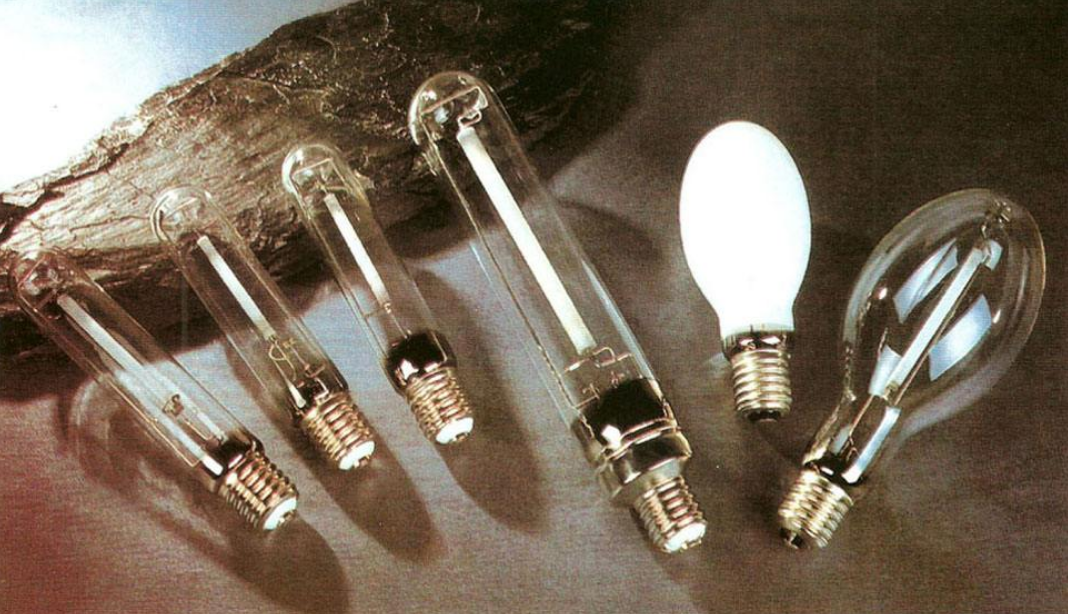
High-Pressure Sodium Lamp: After the lamp starts, an arc is generated between the two electrodes of the discharge tube. Due to the high temperature of the arc, the liquid sodium mercury vapor inside the tube is heated and evaporated into mercury vapor and sodium vapor. When electrons emitted from the cathode move toward the anode, they collide with the atoms of the discharge substance, causing them to gain energy and become ionized or excited. They then return from the excited state to the ground state in an infinite loop. During this process, the excess energy is released in the form of light, resulting in light emission.
-
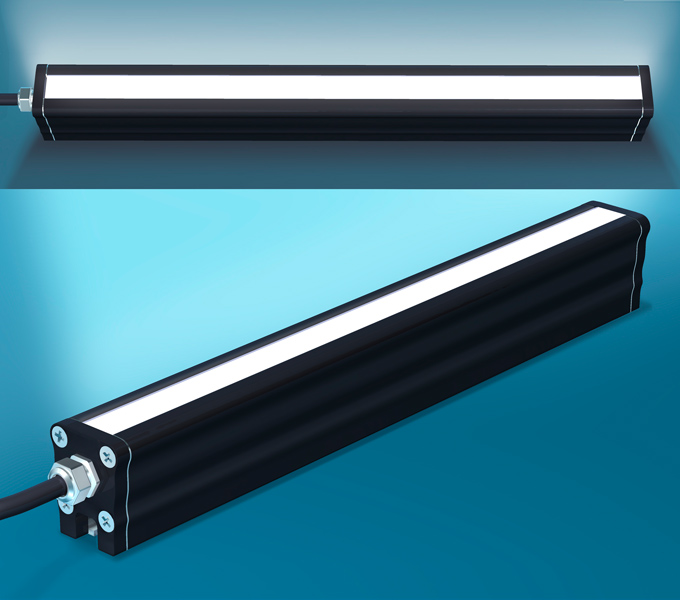
LED Lamp: LED (Light Emitting Diode) is a solid-state semiconductor device that converts electrical energy into visible light. It directly converts electricity into light.
FALenses Technology specializes in providing machine vision core hardware. You can go to the official website of FALenses Technology at https://www.falenses.com/ for more information.