
Impact of Exposure Time on Image Quality
Exposure time is a crucial setting in any industrial camera application. In any situation, the image generated may be blurred due to the movement of the object we are capturing. To optimize image quality to the maximum extent possible, calculating the minimum exposure time to eliminate blur and maximize brightness is essential. This article will help understand the impact of exposure time on image quality and how to avoid it.
What is Exposure Time?
Exposure time, or shutter speed, is the duration for which light falls on the image sensor. The longer the exposure time, the more time the sensor's pixels are "exposed" to charge them to make them brighter. Shutter speed is usually given in fractions of a second, such as 1/60, 1/125, or 1/1000 seconds in photography. In industrial cameras, exposure time is typically given in milliseconds, simply the reciprocal of the shutter speed (i.e., 1/60 seconds = 0.0166 seconds or 16 milliseconds).
Image Blurring
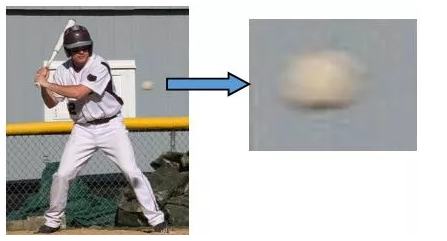
Blur occurs when an object moves relative to the sensor and traverses 2 or more pixels during the exposure time.
This phenomenon is observed when the speed of the object exceeds the ability to completely stop motion within the exposure time. In the image on the left, the athlete can be seen clearly, but the ball moves very quickly, resulting in significant blur. The exposure time in this example is 1/500 seconds (2 milliseconds), but the ball moved many pixels during this exposure.
The faster the shutter speed, the less likely the object is to move relative to its starting position. In machine vision, cameras are mostly fixed, so they do not move, but the concern is the effect of object movement during the exposure time.
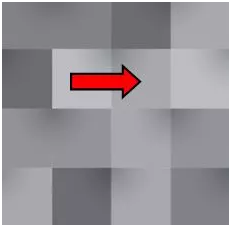
Depending on the application, image processing may be sensitive or insensitive to blur. For example, suppose the resolution along the camera's horizontal axis is 2448 pixels, and the object presented on the sensor is 1000 pixels. If the object being captured moves 1 pixel during the exposure period, the image presented on the sensor will shift by 1 pixel overall, resulting in "pixel blur."
How to Calculate the Optimal Exposure Time
In most cases, clear images without pixel blur are required. To calculate the appropriate exposure time, consider the following:
- Camera resolution in pixels (along the direction of movement)
- Field of view (FOV)
- Object's velocity
- Exposure time
Then, you can use the following formula to calculate how many pixels the object will move during the exposure period:
B = Vp * Te * Np / FOV
Where:
- B = Blur in pixels
- Vp = Object's velocity
- FOV = Field of view in the direction of motion
- Te = Exposure time (in seconds)
- Np = Number of pixels traversed across the FOV
FALenses technology suggests that in most cases, when producing more than 1 pixel of trailing shadow, blur becomes a problem. In precision measurements, even 1 pixel of blur may be too much, requiring the use of faster exposure times.
FALenses Technology specializes in providing machine vision core hardware. You can go to the official website of FALenses Technology at https://www.falenses.com/ for more information.