
Differences Between Object-Side Telecentric, Image-Side Telecentric, and Double Telecentric Lenses
Industrial lenses are crucial imaging components in machine vision systems, and for a system to fully leverage its capabilities, industrial lenses must meet certain requirements. With the widespread application of machine vision systems in precision measurement fields, conventional industrial lenses often fail to meet these requirements, leading to the emergence of telecentric lenses.
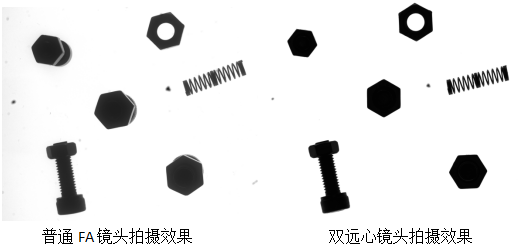
Telecentric lenses are primarily designed to correct the parallax of traditional industrial lenses. They ensure that the image magnification remains constant within a certain object distance range, thereby compensating for the "larger far, smaller near" visual effect of conventional industrial lenses and meeting the requirements of precision measurement. Telecentric lenses can be classified into object-side telecentric, image-side telecentric, and double-sided telecentric based on their design principles.
Principle of Telecentricity
-
Object-Side Telecentric:
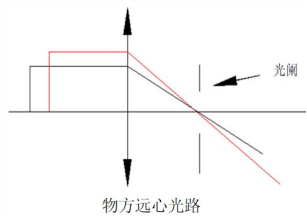
- In the object-side telecentric setup, the aperture stop is placed at the object-side focal plane, while the chief ray on the image side is parallel to the optical axis. This design feature ensures that the magnification of the image is independent of the object distance, effectively eliminating measurement errors introduced by inaccurate focusing on the object side.
-
Image-Side Telecentric:
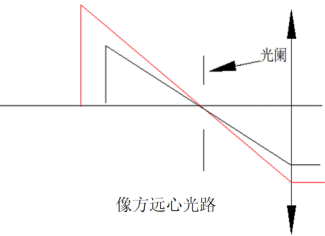
- In the image-side telecentric setup, the aperture stop is placed at the image-side focal plane, while the chief ray on the object side is parallel to the optical axis. The main characteristic of this design is that within a reasonable working range, the magnification of the object is independent of the object distance. Even if the object distance changes, the image height remains constant, ensuring that the measured object size remains unchanged. Lenses designed based on this principle are called image-side telecentric lenses or simply telecentric lenses.
-
Double-Sided Telecentric:
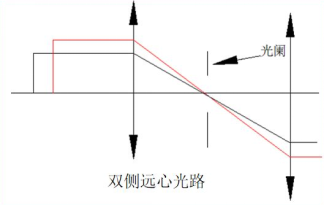
- The double-sided telecentric setup combines the advantages of object-side telecentric and image-side telecentric designs. Within the depth of field, changes in the object distance or camera distance do not affect the magnification of the imaging system. This means that the image does not change with variations in the object distance or camera distance. Lenses developed based on this design principle are called double telecentric lenses.
Lens Parameters
-
Object-side telecentric lenses commonly include parameters such as magnification, working distance, object-side resolution, depth of field, and numerical aperture (NA). Among these parameters, NA is often associated with the object-side resolution, where a higher NA value corresponds to better lens resolution and brightness. The relationship between NA and object-side resolution is expressed as: Object-side resolution = λ/NA, where λ is the wavelength of the test light.
-
Double telecentric lenses have parameters similar to those of object-side telecentric lenses, but they may also include parameters such as telecentricity. Telecentricity is a crucial parameter for evaluating the quality of telecentric lenses. The smaller the angle of deviation of the chief ray from the optical axis, the better the telecentricity and the lower the magnification error of the lens. In practical measurements, this results in consistent magnification of objects within the depth of field, regardless of changes in the working distance. Telecentricity is an essential factor in compensating for the "larger far, smaller near" effect of conventional lenses.
Advantages of Double Telecentric Lenses
Double telecentric lenses are widely used in precision measurement fields. Understanding their optical principles and parameter meanings, one might wonder how to choose between telecentric and double telecentric lenses, considering that both provide consistent magnification within the depth of field and have minimal distortion. In the lens selection process, the advantages of double telecentric lenses become apparent.
Compared to object-side telecentric lenses, double telecentric lenses offer greater depth of field. Under similar conditions, the working range of double telecentric lenses is broader, allowing for observation of a wider range of objects. When there is a significant height difference between the objects to be observed, double telecentric lenses should be prioritized.
Furthermore, double telecentric lenses exhibit higher telecentricity compared to object-side telecentric lenses. In the selection process for precision measurement, if high accuracy in object observation is required, double telecentric lenses would be a better choice.
FALenses Technology specializes in providing machine vision core hardware. You can go to the official website of FALenses Technology at https://www.falenses.com/ for more information.