
Global Agents Wanted! Join us to share market opportunities. Comprehensive training, technical support, and attractive incentives provided. Act now for a brilliant future! Contact email: partners@falenses.com
-
When choosing industrial cameras and lenses for machine vision applications, it's important to understand how each component contributes to the system's overall performance. Here's a breakdown of the key factors to consider:
Industrial Lenses
The lens is crucial in a machine vision system as it focuses light to create images on the camera's sensor. The quality of the lens affects the following:
- Resolution: Determines the level of detail in the captured image.
- Contrast: Affects the distinction between features and background.
- Depth of Field: Impacts the range of distances in focus.
- Aberrations: Includes issues like chromatic aberration, distortion, etc.
Given the importance of the lens, it's crucial to select a high-quality lens appropriate for your specific application.
Industrial Cameras
Industrial cameras capture images for analysis and are used in various applications, such as quality control, object recognition, and inspection. Here are some factors to consider when selecting a camera:
-
System Accuracy and Camera Resolution
- Determine the precision required by your system. Use the following formulas to calculate pixel values:

- The precision of your system dictates the necessary resolution of your camera.
- Determine the precision required by your system. Use the following formulas to calculate pixel values:
-
System Speed and Camera Frame Rate
- Consider the system's speed requirements and the camera's frame rate. The system speed involves image capture (including transmission) and processing time.
- Fast-moving objects require high frame rates, and asynchronous trigger functionality can improve system speed.
-
Camera and Image Acquisition Board Compatibility
- Ensure that the camera and acquisition board are compatible in terms of:
- Video Signal: Different signal formats require compatible acquisition boards.
- Resolution: The acquisition board must support the camera's resolution range.
- Special Features: If the camera has special features (e.g., line scan), ensure the acquisition board supports them.
- Interface: Check the camera's connection type (e.g., Camera Link, GigE, CoaXPress, USB 3.0) and ensure the acquisition board can connect to it.
- Ensure that the camera and acquisition board are compatible in terms of:
-
Cost Considerations
- Once you've identified cameras and lenses that meet your technical requirements, compare prices to ensure you're getting the best value for your application.
Example Application
Consider an example where you're measuring objects on a conveyor belt. The object is 18mm x 10mm, with a precision requirement of 0.01mm, and the system operates at 10 items/second. Here's how to determine the appropriate camera:
- Given the system's speed, a line scan camera is ideal.
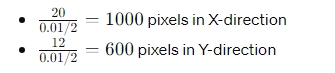
- With a field of view of 20mm x 12mm, an assumed software precision of half a pixel, and a required precision of 0.01mm, the necessary camera resolution is:
- Given this resolution requirement, a 1024x768 pixel camera with a frame rate of at least 10 fps should be sufficient.
By following these considerations, you can effectively select industrial cameras and lenses to ensure optimal performance and compatibility in your machine vision systems.
FALenses Technology specializes in providing machine vision core hardware. You can go to the official website of FALenses Technology at https://www.falenses.com/ for more information.