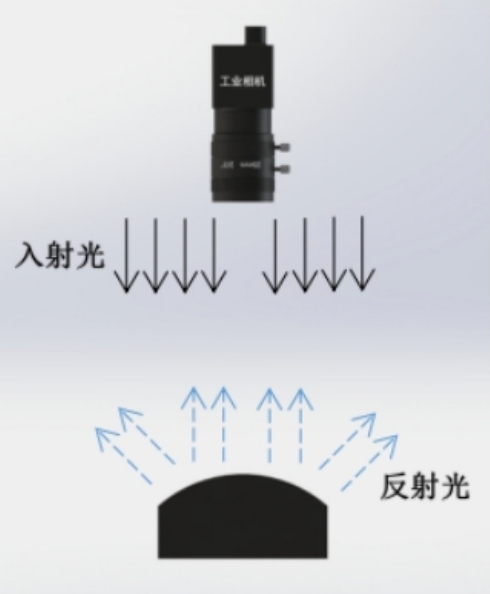
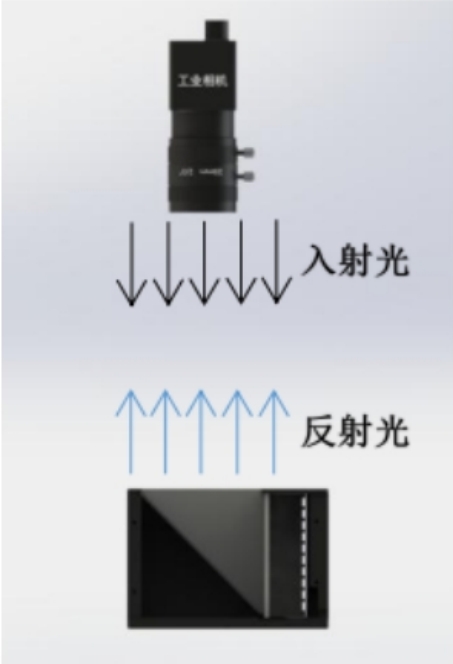
Low-angle Light
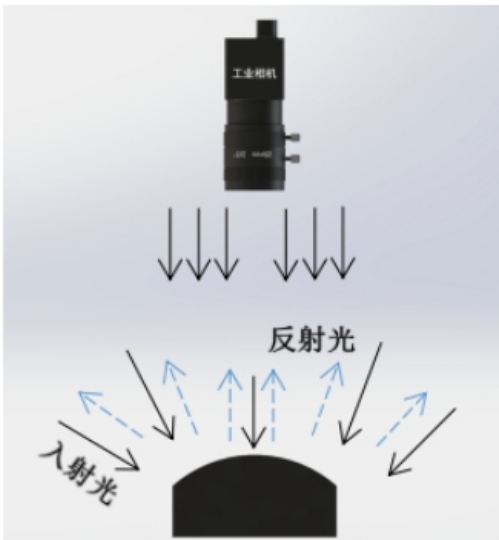
Light Path Description: Light rays with an angle less than 45° relative to the horizontal plane are referred to as low-angle light.
Effect Analysis: With low-angle illumination, reflected light from the smooth surface of the object under inspection cannot enter the lens, resulting in lower grayscale values in the image. However, light reflected from uneven surfaces can enter the lens, resulting in higher grayscale values in the image.
Main Applications: Positioning, character detection, contour detection, scratch detection, dimension measurement.
Common Light Sources: Low-angle ring light, linear light, line light, etc.
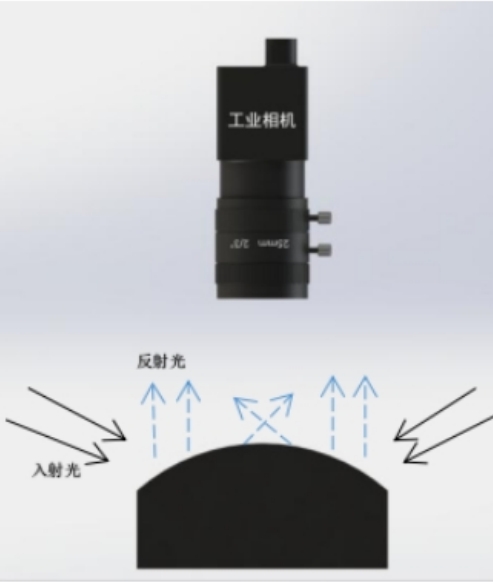
Diffuse Backlighting
Light Path Description: The light source passes through a diffuser to scatter the light.
Effect Analysis: When extracting contours, for products with thickness and curvature, the edges in the image may appear blurred and less sharp. However, for flat products, the image effect is stable, offering a cost-effective solution.
Main Applications: Positioning, dimension measurement, presence/absence detection, defect detection.
Common Light Sources: Area light.
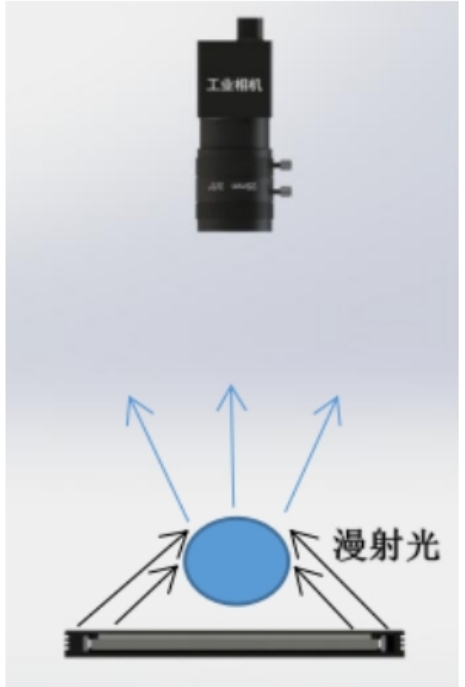
Shadowless Light
Light Path Description: The light path is altered through structural elements or diffuser plates, resulting in a light emission angle that includes both high-angle and low-angle components.
Effect Analysis: Combining the effects of high-angle and low-angle light, shadowless light provides multi-angle illumination for the object under inspection. Surface textures and wrinkles are minimized, resulting in a uniform appearance in the image.
Main Applications: Positioning, dimension measurement, surface inspection of curved products.
Common Light Sources: Dome light, ring shadowless light, square shadowless light, lightbox, etc.
Parallel Backlighting
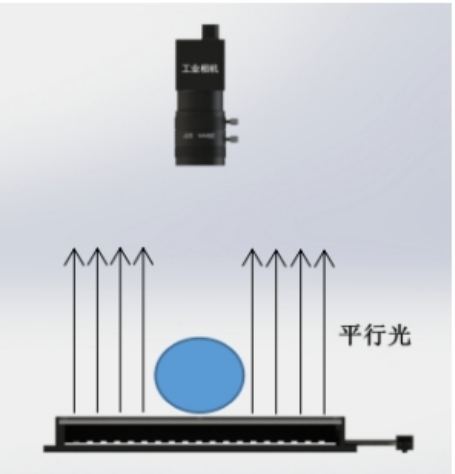
Light Path Description: Light sources emit parallel light through parallel structures.
Effect Analysis: Parallel light enables precise outlining of irregular objects, resulting in clear and sharp imaging of the edges of products such as cylindrical objects or those with chamfers and rounded corners. Typically used with telecentric lenses, it offers high precision.
Main Applications: Dimension measurement.
Common Light Sources: Parallel area light, parallel coaxial light.
FALenses Technology specializes in providing machine vision core hardware. You can go to the official website of FALenses Technology at https://www.falenses.com/for more information.