
Which is Better: Coaxial Light Source or Ring Light Source?
When it comes to machine vision lighting, coaxial light sources and ring light sources are among the most common choices. Deciding which is better depends on understanding the working principles of each light source and their respective application scopes. Let's examine their differences to determine which is more suitable for your specific needs.
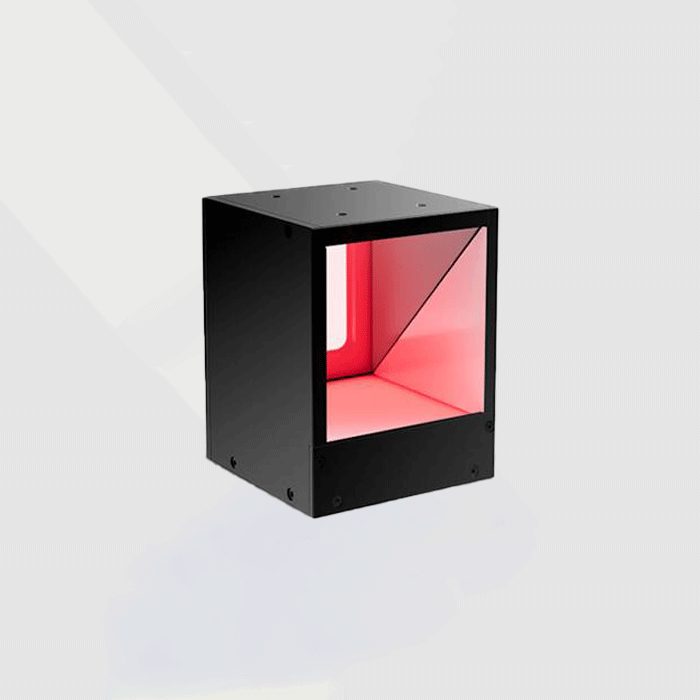
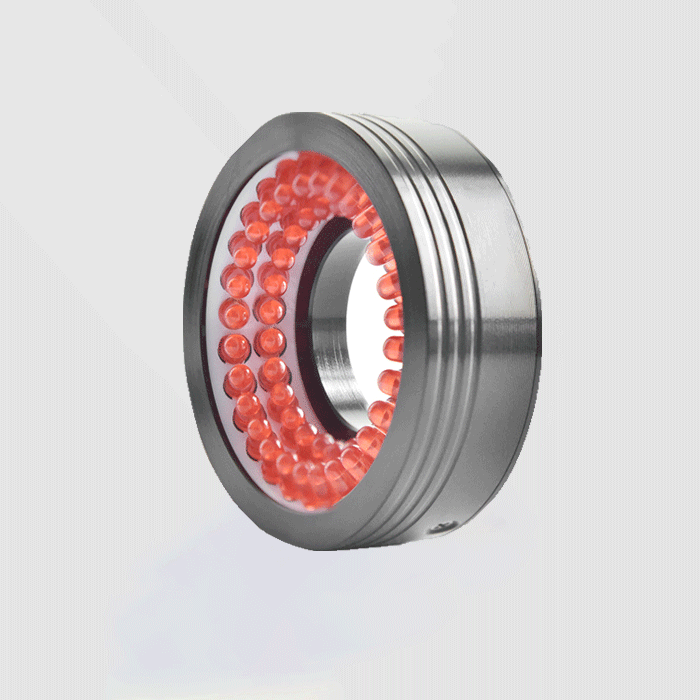
Coaxial Light Source:
Working Principle:
A coaxial light source uses a high-density LED array to emit high-intensity uniform light. This light is reflected by a semi-transparent mirror with a special coating, ensuring the light aligns with the camera's axis. This design eliminates ghosting and glare, making it ideal for inspecting surfaces with high reflectivity, like those with mirror finishes.
Features:
- Reduced Light Loss: The special mirror coating reduces light loss.
- No Ghosting or Glare: The light reflects in a way that avoids ghosting and reflections.
- High Uniformity and Brightness: The light is even and clear, ensuring accurate imaging.
- Efficient Heat Dissipation: LED array design with efficient heat dissipation ensures brightness and longer lifespan.
Applications:
Coaxial light sources are well-suited for the following tasks:
- Detection of scratches or indentations on high-reflective surfaces.
- Inspection of chips and silicon wafers for damage.
- Mark point positioning.
- QR code and barcode reading.
- Character recognition.
Ring Light Source:
Working Principle:
Ring light sources consist of a high-density LED array with a structural design that allows light to be emitted from different angles. This design helps avoid shadows and provides soft, even illumination. A diffuser can be used to further soften and spread the light.
Features:
- 360° Illumination: Light is emitted from all directions, reducing shadows.
- Open Center for Camera Lens: The ring's center allows the camera lens to pass through, ensuring proper alignment.
- Various Angles and Diffuser Options: Multiple angles are available, and diffusers can be added for uniform light.
- Flexible Installation: Supports different mounting options and customizations.
Applications:
Ring light sources are suitable for a broader range of tasks, such as:
- Character and silk-screen recognition.
- Barcode and QR code reading.
- Product edge detection.
- Product dimension measurement.
- Product damage and defect detection.
- Foreign object detection on wafers.
- Detection of impurities in liquids.
Conclusion:
Choosing between coaxial light sources and ring light sources depends on your specific application and inspection needs. Coaxial light sources are typically used for inspecting highly reflective surfaces and preventing ghosting. In contrast, ring light sources are versatile and suitable for broader inspection tasks with even illumination and shadow elimination.
If you're unsure which light source is right for your application, FALenses Technology offers a free lighting test service. By testing with various lighting setups, you can determine the optimal solution for your inspection needs. Ultimately, the best light source is the one that aligns with your specific inspection requirements.
FALenses Technology specializes in providing machine vision core hardware. You can go to the official website of FALenses Technology at https://www.falenses.com/ for more information.