
What Are the Functions and Characteristics of Coaxial Light Sources? What Can They Detect?
Coaxial light sources are one of the commonly used lighting sources in machine vision. For those who are new to machine vision, the various types of light sources can be confusing. Understanding the purpose and characteristics of coaxial light sources can help you determine their best uses. Let's explore the key functions, features, and detection applications of coaxial light sources.
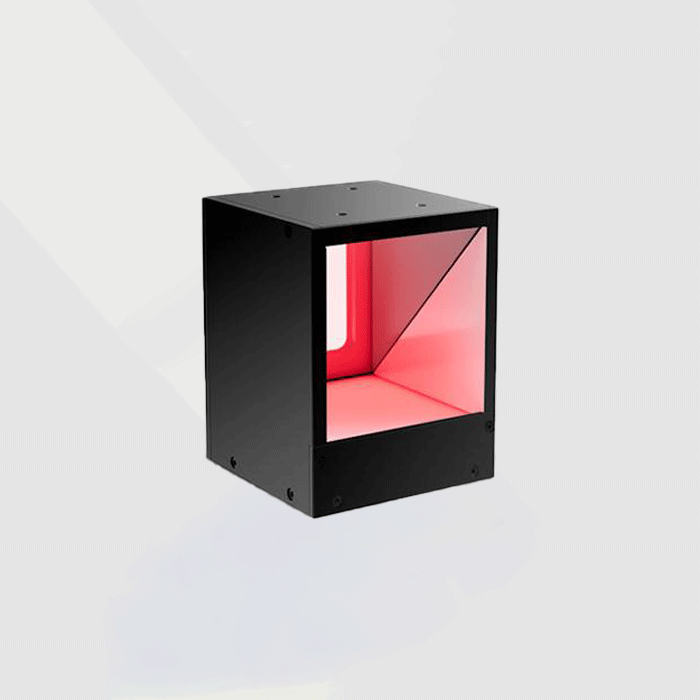
Characteristics of Coaxial Light Sources:
Coaxial light sources are designed to emit high-intensity uniform light through a high-density LED array. The light is reflected by a semi-transparent mirror with a special coating, ensuring the light aligns with the camera's axis. This setup eliminates ghosting and glare, making it suitable for inspecting reflective surfaces.
Key Features:
- Uniform High-Intensity Light: Coaxial light sources produce consistent, high-intensity light that is evenly distributed.
- Reduced Ghosting and Glare: The semi-transparent mirror and the coaxial design ensure no ghosting or glare.
- Alignment with Camera Axis: The light aligns with the camera's optical axis, providing a clear field of view for accurate inspection.
- Ideal for Reflective Surfaces: Coaxial light sources excel at inspecting reflective materials without causing unwanted reflections.
Applications of Coaxial Light Sources:
Given their characteristics, coaxial light sources are ideal for a range of inspection tasks, especially those involving reflective surfaces or delicate structures. Here are some common applications:
1. Laser Mark Detection on Chips
Coaxial light sources are used to inspect laser marks on semiconductor chips, ensuring that they are clear and free from defects.
2. Scratch Detection on High-Reflective Surfaces
They are perfect for detecting scratches, indentations, or other defects on surfaces with a mirror-like finish.
3. QR Code and Barcode Reading on Metal or Glass
Coaxial light sources can accurately illuminate metal or glass surfaces to enable the reading of QR codes and barcodes without glare.
Conclusion:
Coaxial light sources are an excellent choice for machine vision applications involving reflective surfaces or objects where precision and uniform lighting are critical. They are particularly useful for detecting defects on highly reflective materials, inspecting laser marks, and reading barcodes on metal and glass.
If you are unsure whether a coaxial light source is suitable for your application, FALenses Technology offers a free lighting test service. This service allows you to test the light source in your specific context to ensure it meets your requirements before making a purchase.
FALenses Technology specializes in providing machine vision core hardware. You can go to the official website of FALenses Technology at https://www.falenses.com/ for more information.