
How to Choose a Camera and Lens for Machine Vision
Selecting the right industrial camera and lens is crucial in machine vision system design. The camera determines the image resolution, quality, and system operation mode, while the lens focuses light onto the image sensor, impacting overall performance. To ensure an effective machine vision system, it's important to consider several factors when choosing a camera and lens. Let's explore these factors in detail.
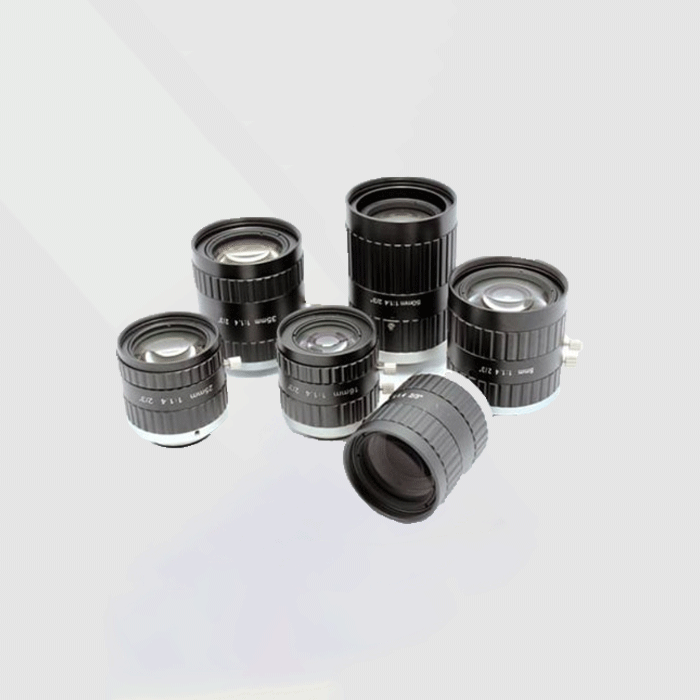
Selecting a Lens: Key Considerations
When choosing a lens for your machine vision system, consider the following principles:
1. Sensor Size of the Compatible Camera
The lens must be compatible with the size of the camera's sensor. A lens designed for smaller sensors might cause vignetting or distortion when used with a larger sensor.
2. Camera Interface Type
Determine the camera's interface type, such as C-mount or CS-mount, to ensure the lens has the correct mount for proper attachment.
3. Working Distance
Consider the distance between the lens and the object being inspected. This affects the focus capabilities and the required focal length.
4. Field of View (FOV) and Lens Field Angle
The field of view is the area captured by the lens, and the field angle determines how wide or narrow the view is. Shorter focal lengths provide a wider FOV, while longer focal lengths offer more magnification with a narrower FOV.
5. Lens Spectral Characteristics
Consider the light spectrum that the lens is designed to handle. Some lenses are optimized for specific wavelengths, such as visible light, ultraviolet, or infrared.
6. Geometric Distortion
Geometric distortion affects the accuracy of measurements. Choose a lens with minimal distortion for applications requiring high precision.
7. Mechanical Structure and Size
The lens's physical size and structure should fit within your system's design constraints. Ensure the lens's dimensions and weight are suitable for your setup.
Selecting a Camera: Key Considerations
When choosing an industrial camera, consider the following factors:
1. Sensor Type: CCD or CMOS
CCD (Charge-Coupled Device) and CMOS (Complementary Metal-Oxide-Semiconductor) sensors have different characteristics. CCD sensors are known for their high image quality, while CMOS sensors offer lower power consumption and faster processing.
2. Video Characteristics
Consider the camera's video features, such as frame rate and line-scan capability, depending on your inspection needs.
3. Signal Output Interface
Ensure the camera has the appropriate output interface for your system, such as USB, GigE, Camera Link, or CoaXPress.
4. Camera Operation Modes
Consider how the camera operates—continuous, triggered, or burst mode. This affects the camera's compatibility with your machine vision system.
5. Video Parameter Adjustment and Control
Determine how the camera's video parameters, such as exposure and gain, can be adjusted. The control methods should suit your system's requirements.
Conclusion
Choosing the right camera and lens is critical for building a successful machine vision system. When selecting a lens, consider factors like sensor size, camera interface, working distance, field of view, spectral characteristics, geometric distortion, and mechanical structure. For the camera, focus on sensor type, video characteristics, signal output interface, operation modes, and video parameter control.
If you're uncertain about which camera and lens to choose, companies like FALenses Technology offer expert advice and guidance to help you select the best options for your specific machine vision application.
FALenses Technology specializes in providing machine vision core hardware. You can go to the official website of FALenses Technology at https://www.falenses.com/ for more information.