
High-Uniformity Integrating Sphere Light Source
An integrating sphere light source, also known as a dome light or a high-uniformity sphere light source, is an optical device designed to measure various optical parameters of light-emitting objects. It plays a crucial role in assessing the spectral intensity, power, luminous flux, scattering distribution, color temperature, and electrical characteristics of light sources. Let's explore its applications, structure, and benefits in more detail.
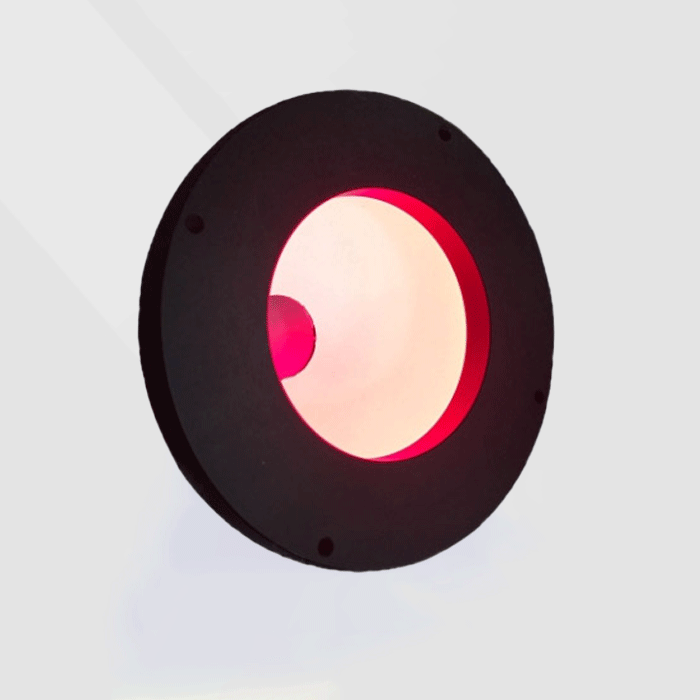
Applications of Integrating Sphere Light Sources:
Integrating sphere light sources have a wide range of applications due to their unique characteristics. Here are some common uses:
1. Reference Source for Calibration
These light sources can be used as reference sources to calibrate various photometric and radiometric instruments. Their uniformity makes them valuable for accurate calibration.
2. Optical Remote Sensing and Calibration
The uniformity of integrating sphere light sources is beneficial for the development and calibration of optical remote sensing instruments. This application is particularly important in aerospace and satellite technology.
3. Calibration of Imaging Systems
Integrating sphere light sources can calibrate CCD cameras, CCS solar collimation systems, image arrays, and optical imaging systems in laboratories. This capability makes them useful in fields like biological research, medical imaging, and environmental monitoring.
4. General Research and Development
These light sources are also used in the research and development of new optical devices and technologies, providing a consistent and uniform light source for experiments and testing.
Structure of Integrating Sphere Light Sources:
Integrating sphere light sources have a unique structure that contributes to their high uniformity and versatility. Here's a typical structure:
1. Sphere-Shaped Cavity with Diffuse Reflective Coating
The core of the integrating sphere is a spherical cavity with an inner wall coated with a diffuse reflective material. This coating ensures even distribution of light within the sphere.
2. LED Light Source
LEDs are often used as the light source due to their high efficiency, low power consumption, long lifespan, and pure light color. LEDs can emit light with high uniformity, contributing to the overall effectiveness of the integrating sphere.
3. Annular Baffle Screen
An annular baffle screen is included to help control the distribution of light within the sphere, ensuring an even illumination pattern.
4. Output Port
The integrating sphere has an output port through which uniform light is emitted. This port can be adjusted in size and position to suit specific applications.
Benefits of Integrating Sphere Light Sources:
The benefits of integrating sphere light sources make them ideal for various applications:
1. High Uniformity
The spherical design and diffuse reflective coating ensure a high level of uniformity in light distribution, making them suitable for calibration and precise measurements.
2. Versatility
The ability to adjust the output port, LED type, and annular baffle screen provides flexibility for different applications and experimental setups.
3. Improved Durability
LED-based integrating sphere light sources are durable and long-lasting, reducing maintenance costs and downtime.
4. Cost-Effective
The use of LEDs reduces energy consumption and operational costs, making these light sources cost-effective.
5. Non-Invasive
The non-invasive nature of integrating sphere light sources ensures that they do not interfere with the objects or systems being measured, maintaining the integrity of the measurement process.
Conclusion:
High-uniformity integrating sphere light sources offer a valuable solution for calibration, optical measurements, and research applications. Their unique structure and benefits make them suitable for a wide range of industries, including aerospace, biomedical, and industrial manufacturing. By providing consistent and uniform light, these light sources contribute to the accuracy and reliability of various optical systems and devices.
FALenses Technology specializes in providing machine vision core hardware. You can go to the official website of FALenses Technology at https://www.falenses.com/ for more information.