
Industrial Lenses in Machine Vision: What You Need to Know
Industrial lenses play a crucial role in machine vision systems, allowing light to be focused onto the image sensor for accurate imaging. The quality of the industrial lens directly impacts the overall performance of the machine vision system. A proper understanding of industrial lenses and their selection criteria is essential for designing a successful machine vision system. Let's delve into the key aspects of industrial lenses and their application in machine vision.
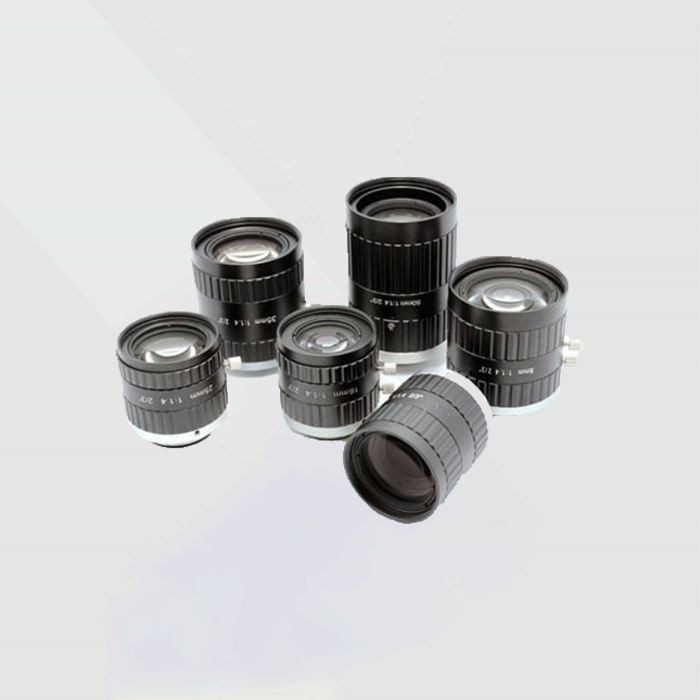
What is the Role of Industrial Lenses in Machine Vision?
The primary function of industrial lenses is to perform light beam transformation (modulation) and focus the imaging target onto the photosensitive area of the image sensor. In machine vision, industrial lenses play a vital role in achieving accurate imaging, which is crucial for inspection and quality control.
Matching Industrial Lenses with Cameras:
When selecting industrial lenses, it's essential to choose ones that match the camera's interface and CCD (Charge-Coupled Device) size. The following are some key considerations for selecting industrial lenses:
1. Camera Interface and CCD Size
The most common camera interfaces for industrial lenses are C-mount and CS-mount. C-mount is widely used in factory automation (FA) and other industrial applications, while CS-mount is popular in smaller security cameras. It's crucial to ensure that the lens interface matches the camera's interface.
2. Lens Compatibility
C-mount lenses can be used with both C-mount and CS-mount cameras (with a CS-to-C adapter), while CS-mount lenses can only be used with CS-mount cameras. This interchangeability affects the flexibility of the lens selection.
3. Avoiding Vignetting
If a camera with a larger CCD size uses a lens designed for a smaller CCD, there may be areas around the edges that appear black, a phenomenon known as vignetting. To avoid this issue, ensure the lens is designed for the correct CCD size.
Understanding Industrial Lens Design:
Industrial lenses are designed using different types of optical materials with varying refractive indices. The lenses are ground and shaped to create high-precision curved surfaces. Since the time of Galileo, this basic principle has been used to create lenses. To achieve clearer images, new materials and aspheric lenses are continuously being developed and tested.
Conclusion:
Industrial lenses are a critical component of machine vision systems, enabling accurate imaging and contributing to overall system performance. When selecting industrial lenses, it's essential to consider the camera interface, CCD size, and lens compatibility to ensure proper matching and avoid vignetting. By choosing the right industrial lens, you can improve the accuracy and reliability of your machine vision system.
If you have questions or need assistance in choosing the right industrial lens, companies like FALenses Technology can provide expert guidance and support to help you make the best selection for your specific machine vision application.
FALenses Technology specializes in providing machine vision core hardware. You can go to the official website of FALenses Technology at https://www.falenses.com/ for more information.