
Key Points for Selecting Machine Vision Light Sources
Selecting the right light source is crucial in machine vision systems, as it can significantly affect the quality of image capture and subsequent defect detection. There are various types of light sources, and choosing the correct one depends on several factors, including the type of inspection, target object characteristics, and desired outcomes. Below are key points to consider when selecting machine vision light sources:
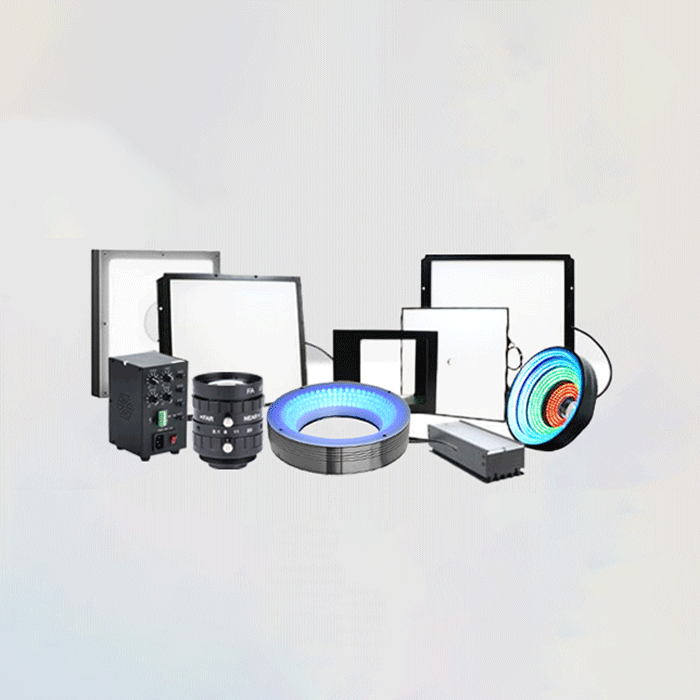
1. Linear Light Source Selection:
- Illumination Width: Ensure the illumination width is greater than the detection distance to avoid brightness drop due to distance.
- Light Source Length: Choose a length that matches the area to be illuminated, avoiding excessive length that complicates installation and increases costs.
- Diffusion Plate: If illuminating high-reflective objects, use a diffusion plate. For darker or non-reflective objects, remove the diffusion plate for higher brightness.
2. Ring Light Source Selection:
- Installation Distance: Consider the installation distance to filter out certain angles of light. A higher installation distance may require a smaller angle.
- Target Size: If the target is small and its main features are centrally located, opt for smaller-diameter ring lights with smaller angles.
- Edge Features: If inspecting edge features, consider a 90-degree ring light or larger diameter high-angle ring light.
- Scratch Detection: For detecting surface scratches, select shorter wavelength light sources and 90-degree ring lights.
3. Combination Bar Light Selection:
- Target Shape and Size: Combine different bar lights to match the shape and size of the target object.
- Installation Height: Consider the installation height and choose a light source length that ensures even illumination of all sides.
4. Backlight and Parallel Backlight Selection:
- Target Size: Choose a backlight with a size that matches the object, avoiding excessive size to reduce costs.
- Avoid Edge Positioning: Due to outer casing blocking, avoid placing targets at the edge, where brightness is lower.
- Short Wavelength for Contour Detection: Use shorter wavelength light sources for higher contrast and reduced diffraction.
- Optimal Distance: Find the optimal distance between the backlight and the target, avoiding extreme distances.
- Application-Specific Adjustments: For level detection, use the backlight in a side-standing position. For round objects, consider parallel backlights.
5. Coaxial Light Source Selection:
- Emitting Area: Select a light source with an emitting area 1.5-2 times the size of the target to ensure even illumination.
- Avoid High Installation: Coaxial lights lose brightness at greater distances, so avoid installing them too high.
- Ensure Uniformity: Larger coaxial light sources ensure even light distribution due to the 45-degree half-mirror structure.
6. Parallel Coaxial Light Source Selection:
- Specialized for Scratch Detection: Ideal for detecting scratches and cannot replace coaxial lights in general applications.
- Avoid Long Wavelength: Use shorter wavelengths for scratch detection for higher contrast and reduced light loss.
7. General Light Source Selection Guidelines:
- Consider Target Characteristics: Understand the size, shape, and material of the target object.
- Installation Constraints: Account for space and potential obstructions in the installation area.
- Customization: Consider the need for customized solutions based on unique requirements.
By following these key points, you can ensure the proper selection of machine vision light sources, leading to optimal image capture and reliable defect detection. If you need further assistance in choosing the right light source, companies like FALenses Technology can provide expert guidance and support, offering a wide range of light source options tailored to your specific needs.
FALenses Technology specializes in providing machine vision core hardware. You can go to the official website of FALenses Technology at https://www.falenses.com/ for more information.