
What Is a Machine Vision Light Source? What Are Three Tips for Selecting Vision Light Sources?
A machine vision light source provides illumination in a machine vision system, allowing for the distinction between the target object and the background, resulting in high-quality images with enhanced contrast. Proper lighting can significantly reduce the complexity of image processing algorithms while improving the accuracy and reliability of the system. Let's explore the concept of a machine vision light source and the three tips for selecting vision light sources.
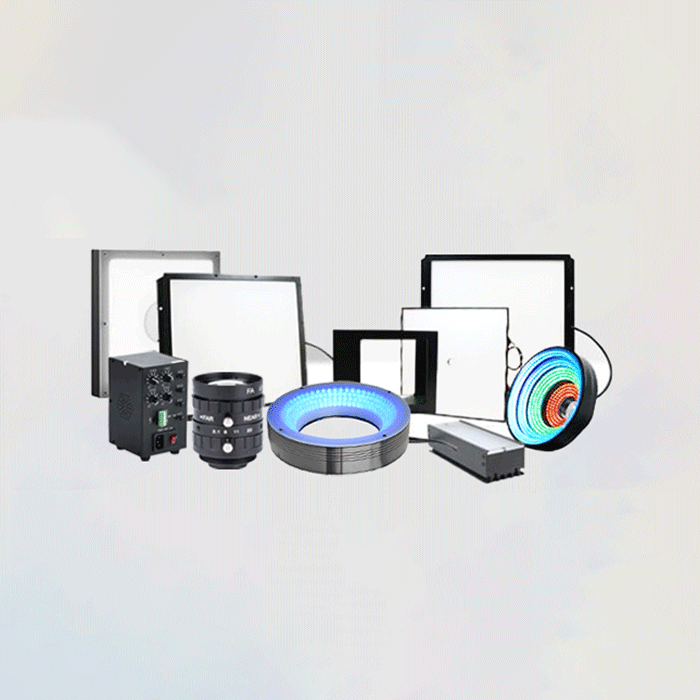
What Is a Machine Vision Light Source?
In a vision inspection system, the light source provides the necessary illumination to highlight the target object's features, enabling the camera to capture clear images. The choice of light source has a direct impact on the data quality and can affect up to 30% of the overall system performance. Adequate lighting allows for better image capture, making it easier to differentiate the target object from the background.
Three Tips for Selecting Vision Light Sources:
Choosing the appropriate vision light source requires consideration of various factors, such as the type of object, its material, and the desired outcome. Here are three key tips for selecting vision light sources:
Tip 1: Utilize the Characteristics of Wavelengths
- Infrared Light: With longer wavelengths, infrared light has strong penetration properties. Infrared light sources can filter out interference from organic coatings and detect surface scratches. They can also penetrate dark-colored liquids to detect internal impurities.
- Ultraviolet Light: With shorter wavelengths, ultraviolet light has high diffusion rates and can excite fluorescence. UV light is suitable for transparent surface mark point positioning, router character detection, UV glue detection, and invisible code reading.
Tip 2: Combine Colors (Complementary and Adjacent Colors)
- Complementary Colors: In grayscale imaging, combining complementary colors (opposite colors on the color wheel) results in darker shades.
- Adjacent Colors: Combining adjacent or similar colors on the color wheel results in lighter shades in grayscale imaging.
Tip 3: Different Materials Reflect Light Differently
- Metal Materials: Different metals reflect light differently depending on the wavelength. Copper and gold have weaker reflections with shorter wavelengths, while silver and aluminum show the most variation around 850 nm.
- Blue Light: Blue light sources can better distinguish between copper, gold, and aluminum.
Conclusion:
Machine vision light sources are crucial for the success of a machine vision system. Properly designed lighting can enhance image quality, reduce processing complexity, and improve system accuracy. When selecting a vision light source, consider the wavelength characteristics, color combinations, and material reflections. If you're uncertain about which light source to choose, companies like FALenses Technology offer a wide range of light source options and expert guidance to help you make the right choice.
Following these tips can lead to improved lighting design and ultimately better performance in your machine vision system.
FALenses Technology specializes in providing machine vision core hardware. You can go to the official website of FALenses Technology at https://www.falenses.com/ for more information.