
What Are the Colors and Classifications of Light Sources in Machine Vision Systems?
Machine vision systems rely on proper illumination to capture and process images of target objects. The choice of light source, its color, and type directly affect the quality of image acquisition and system stability. In this discussion, we'll explore the colors commonly used in machine vision light sources and the various classifications of light sources.
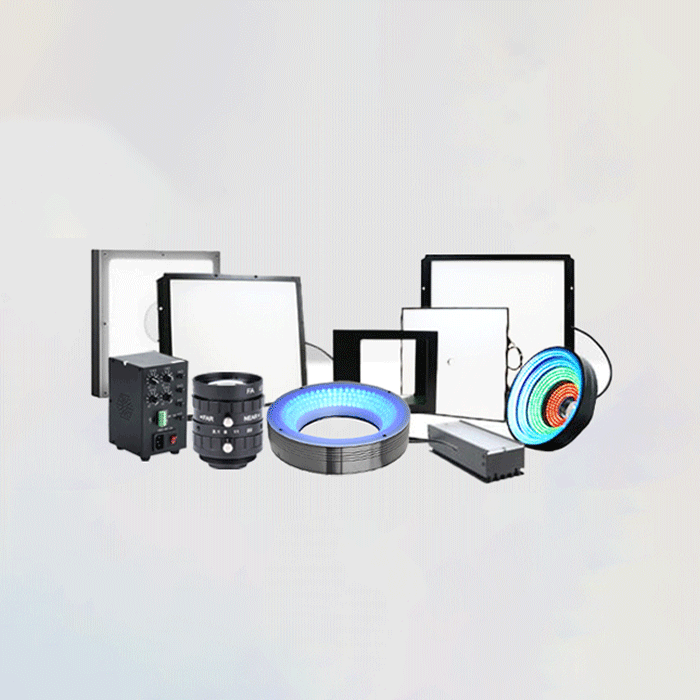
Role of Vision Light Sources in Machine Vision:
The primary role of a light source in a machine vision system is to illuminate the target, enhance the contrast between the feature of interest and the background, and create imaging effects that facilitate image processing. Proper lighting helps overcome ambient light interference and ensures image stability.
Colors of Vision Light Sources:
The most common colors used in vision light sources are white, blue, red, green, and others. Let's delve into the details of each color and its typical applications.
1. White Light Source (W)
White light is characterized by its color temperature. A color temperature above 5000K tends to be bluish (cool color), while below 3300K, it tends to be reddish (warm color). Between 3300K and 5000K is considered a neutral color. White light sources are commonly used for general illumination and applications requiring natural color rendering.
2. Blue Light Source (B)
Blue light has a wavelength between 430 and 480 nm, suitable for applications with silver backgrounds.
3. Red Light Source (R)
Red light has a wavelength between 600 and 720 nm, suitable for applications with dark backgrounds.
4. Green Light Source (G)
Green light has a wavelength between 510 and 530 nm, suitable for applications with red or silver backgrounds.
5. Infrared Light Source (IR)
Infrared light has a wavelength between 780 and 1400 nm, which is invisible to the human eye. It is used in applications like LCD screen inspection and video surveillance. Longer wavelengths tend to exhibit more diffraction, making them less suitable for detecting scratches on metal surfaces.
6. Ultraviolet Light Source (UV)
Ultraviolet light has a wavelength between 190 and 400 nm, also invisible to the human eye. It is used for applications like document verification, touchscreen ITO (Indium Tin Oxide) detection, fabric surface damage detection, and metal surface scratch detection.
Classifications of Vision Light Sources:
LED-based light sources are ideal for machine vision due to their high vibration resistance, long lifespan, fast response time, and design flexibility. Common types of vision light sources include:
1. Ring Light Source
A circular light source often used around camera lenses, providing consistent illumination from all angles.
2. Backlight Source
A light source placed behind the object, creating a silhouette that emphasizes the object's edges.
3. Bar Light Source
A linear light source used for applications requiring directional lighting.
4. Coaxial Light Source
A light source that aligns with the camera's optical axis, useful for inspecting highly reflective surfaces.
5. Point Light Source
A small, focused light source used for specific applications requiring precise illumination.
6. Dome Light Source
A light source that provides diffuse illumination, reducing shadows and specular reflections.
Conclusion:
Choosing the right color and type of light source is essential for achieving high-quality image capture and effective machine vision performance. Understanding the specific requirements of your application will guide you in selecting the most suitable light source. If you need assistance, companies like FALenses Technology offer a wide range of light sources and expert guidance to help you find the best solution for your needs.
FALenses Technology specializes in providing machine vision core hardware. You can go to the official website of FALenses Technology at https://www.falenses.com/ for more information.