
What Is the Purpose of Industrial Light Sources in Machine Vision Imaging Systems?
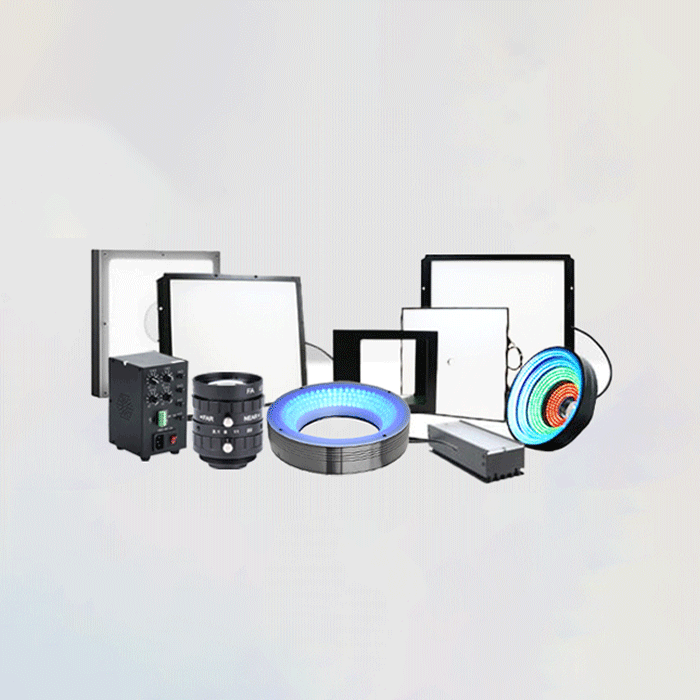
In machine vision systems, image quality is the key to successful detection and analysis, and the industrial light source plays a critical role in determining image clarity. In defect detection, the role of industrial light sources is significant for the following reasons:
1. Illumination for Defect Detection
Industrial light sources illuminate the inspection area, increasing brightness and enabling the detection of defects.
2. Improving Imaging Effects
Proper lighting enhances imaging effects, making it easier for image processing algorithms to extract meaningful information.
3. Reducing Environmental Light Interference
By providing consistent and controlled lighting, industrial light sources help reduce interference from ambient light, resulting in more stable images.
4. Reference for Measurement and Comparison
In certain applications, light sources can serve as a measurement tool or provide a reference for comparison in measurements.
Types of Industrial Light Sources in Machine Vision:
Compared to traditional light sources like xenon lamps, fluorescent lights, and halogen lamps, LED light sources offer several advantages, making them the dominant choice in machine vision systems. LED light sources are known for their long lifespan, brightness stability, flexibility in creating different shapes, strobing capabilities, and energy efficiency.
Machine vision systems typically use two types of LED light sources: front illumination and backlight illumination.
Front Illumination
Front illumination light sources are used to inspect surface features of an object. Depending on the structure, front illumination sources can be further classified into ring lights, bar lights, and coaxial lights.
-
Ring Light Source: Ring lights are ideal for providing multi-directional illumination, minimizing shadows, and highlighting three-dimensional features.
-
Bar Light Source: Bar lights offer linear illumination, reducing reflections and enhancing image clarity.
-
Coaxial Light Source: Coaxial lights are suitable for inspecting uneven or reflective surfaces, helping to detect engraved patterns, cracks, scratches, and differentiate between low and high reflectivity areas.
Backlight Illumination
Backlight sources provide intense illumination from behind the object, emphasizing its silhouette and contour. Backlight illumination is useful for measuring object outlines and detecting the purity of transparent materials.
Conclusion:
Industrial light sources are essential in machine vision imaging systems. They play a pivotal role in ensuring accurate and stable image capture, enabling effective defect detection and measurement. The choice of light source depends on the specific application requirements and object characteristics.
Different types of light sources, such as ring lights, bar lights, coaxial lights, and backlights, offer unique benefits in machine vision applications. By understanding the purpose and functionality of each type, you can make informed decisions about which light source is best suited for your machine vision system.
If you're unsure about the right light source for your application, companies like FALenses Technology offer a wide range of light sources and expert guidance to help you find the best solution for your specific needs.
FALenses Technology specializes in providing machine vision core hardware. You can go to the official website of FALenses Technology at https://www.falenses.com/ for more information.