
What Are the Common Colors of Light Sources in Machine Vision Systems?
Machine vision systems consist of various components, including industrial camera lenses, CCD cameras, vision light sources, and software systems. The light source plays a crucial role in distinguishing the object from the background, ensuring high-quality image capture, and facilitating image processing. Choosing the appropriate light source color is essential for building a reliable machine vision system. Let's explore the common colors used in vision light sources and their typical applications.
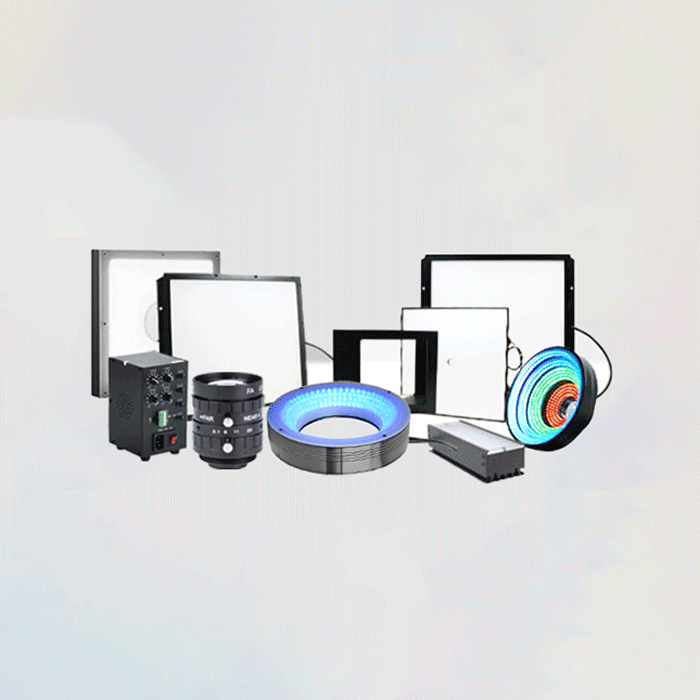
Common Colors in Vision Light Sources:
1. White Light Source (W)
White light is often defined by its color temperature. Higher color temperature (above 5000K) tends to be bluish (cool color), while lower color temperature (below 3300K) tends to be reddish (warm color). A color temperature between 3300K and 5000K is considered neutral. White light sources are widely applicable, providing high brightness and used more frequently when capturing color images.
2. Blue Light Source (B)
Blue light has a wavelength between 430 and 480 nm. It is suitable for applications with silver backgrounds, such as sheet metal, machined parts, or metal-printed thin films.
3. Red Light Source (R)
Red light has a wavelength between 600 and 720 nm. It can penetrate darker objects, making it useful for applications such as hole positioning in black transparent soft boards, circuit detection on green PCB boards, or thickness detection of translucent films. Red light provides higher contrast in these applications.
4. Green Light Source (G)
Green light has a wavelength between 510 and 530 nm, falling between red and blue. It is primarily used for products with red or silver backgrounds.
Applications and Considerations:
Different light source colors have specific applications depending on the requirements of the machine vision system. Here's a summary of where these colors are commonly used:
- White Light: Used for general illumination, suitable for color imaging, and provides high brightness.
- Blue Light: Ideal for applications with silver backgrounds or metal surfaces.
- Red Light: Suitable for inspecting darker objects and achieving higher contrast.
- Green Light: Useful for red and silver backgrounds, and certain color-specific applications.
Choosing the right color is crucial to ensure proper illumination, achieve high contrast, and facilitate easier image processing. When selecting a light source color, consider the specific requirements of your application and the type of camera you are using (black-and-white or color).
Conclusion:
Understanding the common colors in machine vision light sources and their typical applications can help you make an informed decision when selecting light sources for your system. Proper color selection contributes to improved image quality, higher contrast, and more reliable machine vision performance. If you're unsure which color to choose, companies like FALenses Technology offer a wide range of light sources and expert guidance to help you select the most suitable option for your needs.
FALenses Technology specializes in providing machine vision core hardware. You can go to the official website of FALenses Technology at https://www.falenses.com/ for more information.