
6 Types of Machine Vision LED Light Sources
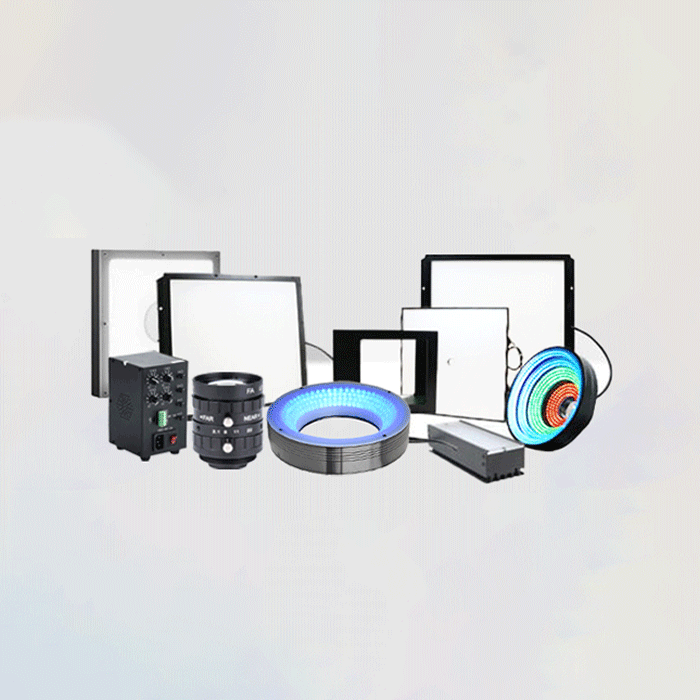
Machine vision systems often rely on various types of industrial light sources for effective inspection and analysis. Let's explore six common categories of machine vision LED light sources, each with unique characteristics and applications.
1. Ring Light Source
Ring light sources offer different illumination angles and color combinations to highlight the three-dimensional structure of objects. They are designed with high-density LED arrays for high brightness and can address shadow issues with diagonal illumination. Optional diffuser panels can be used for even light distribution.
Applications: PCB substrate inspection, IC component inspection, microscope illumination, LCD calibration, plastic container inspection, and integrated circuit marking.
2. LED Backlight
Backlights use high-density LED arrays to provide intense illumination from behind the object, emphasizing the object's outline and making them ideal for measuring shapes and contours. These backlights can offer dual-color or multi-color configurations to meet various inspection requirements.
Applications: Measuring mechanical parts, inspecting electronic components and ICs, detecting film blemishes, and identifying scratches on transparent objects.
3. LED Bar Light
Bar lights are ideal for larger square or rectangular objects, providing flexibility in adjusting illumination angles and installation options. Colors can be customized based on specific needs.
Applications: Metal surface inspection, image scanning, surface crack detection, LCD panel inspection, etc.
4. LED Coaxial Light
Coaxial light sources eliminate shadows caused by uneven object surfaces, reducing interference in imaging. They use beamsplitter designs to minimize light loss and improve imaging clarity with uniform surface illumination.
Applications: Ideal for high-reflective objects, such as metals, glass, films, and chips. Suitable for detecting surface scratches, chip and silicon wafer damage, mark point positioning, and barcode reading.
5. LED Line Light
Line lights are designed with high brightness using cylindrical lenses to focus light. They are mainly used in continuous inspection scenarios, making them suitable for use in linear inspection processes.
Applications: Line-scan cameras, AOI (Automated Optical Inspection), etc.
6. LED Spot Light
Spotlights use high-powered LEDs with compact sizes and high light intensity. They are suitable for use as coaxial light sources with high-efficiency heat dissipation, extending the life of the light source.
Applications: Ideal for telecentric lenses, chip inspection, mark point positioning, and LCD or glass substrate alignment.
Each of these LED light sources has specific applications and unique features, allowing for versatile use in machine vision systems. Proper selection of light sources is crucial for achieving the desired inspection results, and companies like FALenses Technology offer a variety of light sources and customization options to meet your specific needs.
FALenses Technology specializes in providing machine vision core hardware. You can go to the official website of FALenses Technology at https://www.falenses.com/ for more information.