
Telecentric lenses are widely used in industrial and scientific applications, particularly in machine vision systems. Their unique imaging properties allow for high precision and distortion-free images, crucial for accurate measurements and quality control. However, to achieve optimal performance from telecentric lenses, precise adjustments are required. This article outlines the methods for adjusting telecentric lenses.
Overview of Telecentric Lens Adjustment
Adjusting telecentric lenses involves two key aspects: optical adjustment and mechanical adjustment. Optical adjustments focus on tuning the lens's focal length, optical axis, and distortion to obtain clear, distortion-free images. Mechanical adjustments focus on positioning and orienting the lens to ensure stability and accuracy.
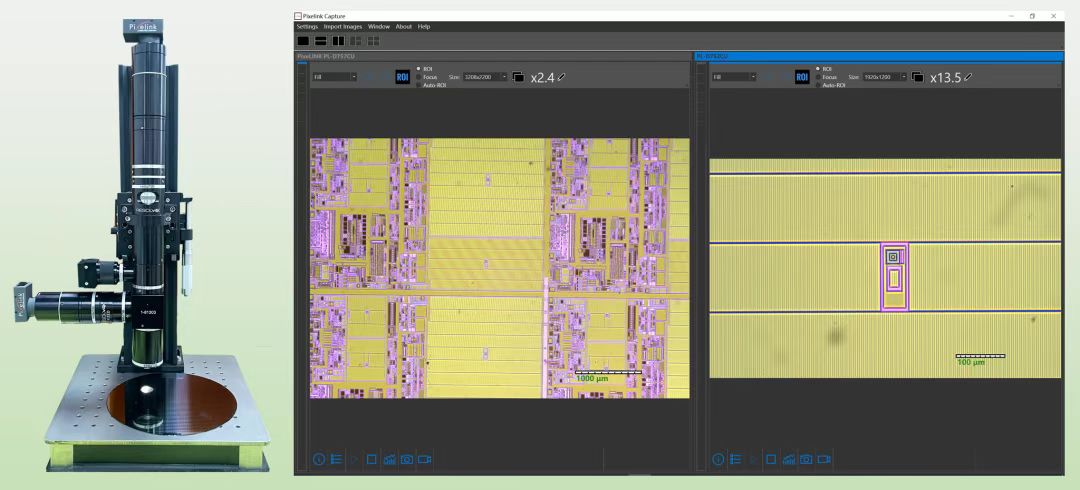
Optical Adjustments
-
Focal Length Adjustment Adjusting the focal length is fundamental in achieving a sharp image. Incorrect focal length leads to blurry or distorted images. Use a standard calibration target for this adjustment. Position the calibration target in front of the lens and rotate the focus ring to get the clearest lines on the target. This ensures proper focal length.
-
Optical Axis Alignment Optical axis alignment ensures the lens's optical axis is parallel to the image sensor plane, preventing image distortion. A cross-line calibration target is commonly used for this adjustment. Position the target in front of the lens and rotate the alignment ring to ensure the cross lines are straight without distortion.
-
Distortion Correction Distortion correction adjusts the lens to eliminate image warping caused by lens distortions. Use a calibration target with straight lines. Position the target in front of the lens and rotate the distortion correction ring until the lines appear straight on the image sensor. Multiple iterations might be necessary for optimal results.
Mechanical Adjustments
-
Position Adjustment Position adjustment involves setting the lens's height, tilt, and rotation to ensure stability and accuracy. This requires precise measurement tools, such as laser interferometers. During adjustment, check and adjust repeatedly until the optimal position is achieved.
-
Orientation Adjustment Orientation adjustment focuses on setting the lens's pitch, yaw, and roll to maintain stability and accuracy. This requires high-precision servo motors, controllers, and attitude measurement tools. Perform repeated tests and corrections to achieve the desired orientation.
Conclusion
Adjusting telecentric lenses is a complex and delicate process, requiring careful consideration of both optical and mechanical factors. Proper adjustment requires professional tools and equipment, along with a structured approach. Only through precise adjustments can telecentric lenses deliver high precision and stability, enabling them to play a pivotal role in machine vision systems.