
Semiconductor microscopes are a type of high-resolution microscope used to observe semiconductor materials and devices. Their applications are widespread, covering fields like electronics, microelectronics, optoelectronics, and nanotechnology.
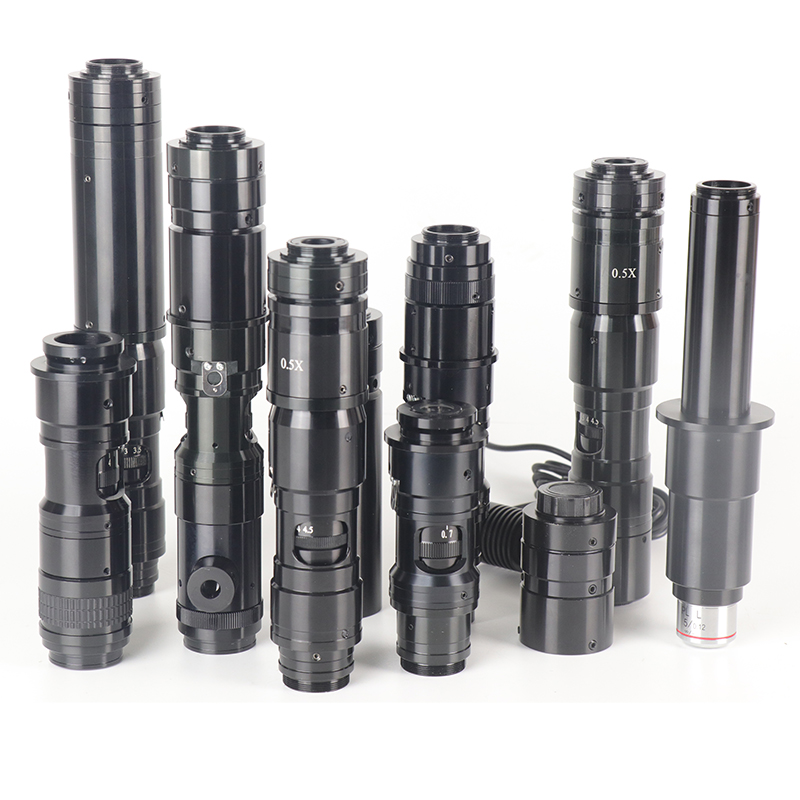
A semiconductor microscope has a structure and working principle similar to a traditional optical microscope, but with significant differences. It mainly consists of two parts: an optical microscope and an electron beam system. The optical microscope is primarily used for sample positioning and initial observation, while the electron beam system is for high-resolution imaging. In the electron beam system, electrons are accelerated and then focused onto the sample through a lens system, where they interact with the sample, resulting in scattering or absorption of electrons. A detector receives the scattered or absorbed electrons and converts them into images.
Here are the key functions of a semiconductor microscope:
-
Morphological Observation: Semiconductor microscopes can provide detailed information about the surface morphology of a sample. Using optical microscopes, scanning electron microscopes (SEMs), and transmission electron microscopes (TEMs), one can observe the surface texture, grain distribution, and other characteristics. This is important for studying material growth, surface quality, and processing impacts.
-
Crystalline Structure Analysis: Semiconductor microscopes can reveal the crystal structure of semiconductor materials. TEM and selected area electron diffraction (SAED) can be used to observe the crystal lattice structure, crystal orientation, and defects. This is crucial for understanding crystal growth mechanisms, defect formation, and optimizing material properties.
-
Defect Detection and Analysis: They can help detect and analyze defects in semiconductor materials. SEM and TEM allow observation of crystal defects, dislocations, grain boundaries, and stacking faults. This helps assess material quality, identify defect types and density, and improve manufacturing processes.
-
Elemental Analysis and Mapping: Semiconductor microscopes can perform elemental analysis and mapping. Techniques like energy-dispersive X-ray spectroscopy (EDS) and electron energy loss spectroscopy (EELS) enable quantitative analysis of the sample's elemental composition and spatial mapping of elements. This aids in detecting impurities, understanding their distribution, and ensuring material purity.
-
Optoelectronic Properties Study: These microscopes can be used to study the optoelectronic properties of semiconductor materials. Optical microscopes and fluorescence microscopes help observe optical properties, fluorescence emission, and excitation. This is crucial for understanding photonic conversion efficiency, band structure, and optical performance.
-
Nanostructure Research: Semiconductor microscopes can be used to study the morphology and properties of nanostructures. High-resolution SEMs, TEMs, and atomic force microscopes (AFMs) allow observation of nanoparticles, nanowires, and thin films. This is vital for nanomaterial synthesis, property tuning, and application research.
Overall, semiconductor microscopes have diverse functions, including morphological observation, crystalline structure analysis, defect detection and analysis, elemental analysis and mapping, optoelectronic properties study, and nanostructure research. These functions make semiconductor microscopes indispensable tools for semiconductor research and development, providing critical information for designing, manufacturing, and optimizing semiconductor devices.
FALenses Technology specializes in providing machine vision core hardware. You can go to the official website of FALenses Technology at https://www.falenses.com/ for more information.