
An objective lens is a complex optical component consisting of multiple lenses combined together. The purpose of combining these lenses is to overcome the imaging defects of a single lens and to improve the optical quality of the objective. In microscopy, the magnification function is primarily determined by the objective, and the quality of the objective directly affects the imaging quality of the microscope. The objective is the main component that determines the microscope's resolution and the clarity of its imaging, making its calibration crucial.
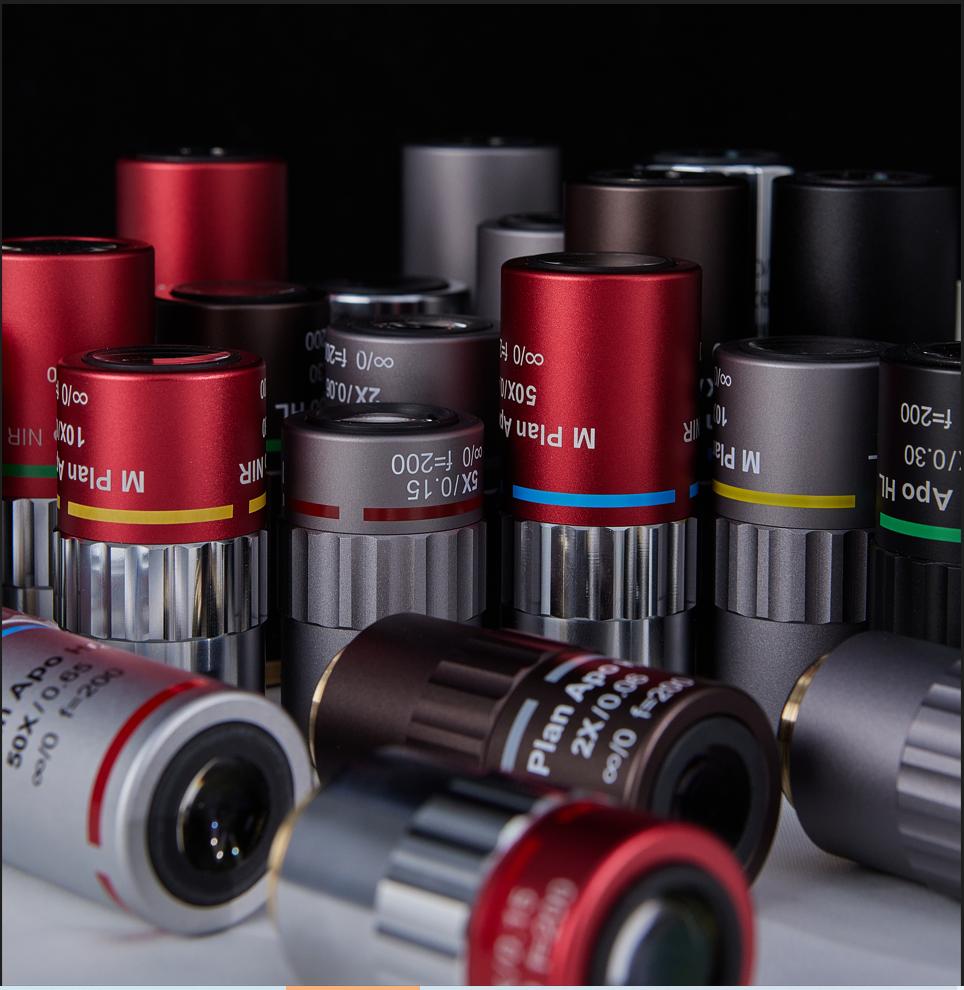
Focusing Ability: When examining a specimen with a certain magnification, if the image is clear, switching to another objective should also result in a clear image without significant center deviation—this is known as parfocality. The quality of parfocality and the degree of alignment are key indicators of a microscope's quality. They depend on the intrinsic quality of the objective lens and the precision of the objective turret.
Optical Characteristics: An objective lens is different from an eyepiece in terms of its contribution to imaging. The objective is the most complex and critical part of a microscope, working with a wide beam (large aperture) but with small angles relative to the optical axis (narrow field of view). The eyepiece, on the other hand, works with a narrow beam but with large angles (wide field of view). Due to these optical characteristics, the design and calculation methods for objectives and eyepieces vary in terms of correcting aberrations.
Application: In a standard microscope setup, there's typically a turret at the lower end of the microscope tube containing multiple objectives. Generally, there are three to four objectives. The shortest one, typically marked "10×", is the low-power objective. The medium-length one, marked "40×", is the high-power objective. The longest one, marked "100×", is the oil immersion objective. Additionally, the high-power and oil immersion objectives often have color-coded rings for easy differentiation.
Each objective has its unique role and requirements. Lower magnification objectives (such as the 10×) are used for broader observation and locating structures. Higher magnification objectives (such as 40×) are for detailed observation of smaller structures. Oil immersion objectives (100×) are for observing extremely fine details, using immersion oil to increase resolution and light collection.
FALenses Technology specializes in providing machine vision core hardware. You can go to the official website of FALenses Technology at https://www.falenses.com/ for more information.