
Machine Vision Lenses Machine vision is a technology widely used in manufacturing, aerospace, healthcare, security surveillance, and automation. In these applications, camera lenses are one of the core components of machine vision systems. To achieve optimal imaging results, it's often necessary to calculate the appropriate focal length based on specific visual requirements. This article discusses the fundamentals of machine vision lenses and how to calculate the focal length, focusing on the following aspects.
I. Fundamentals of Machine Vision Lenses
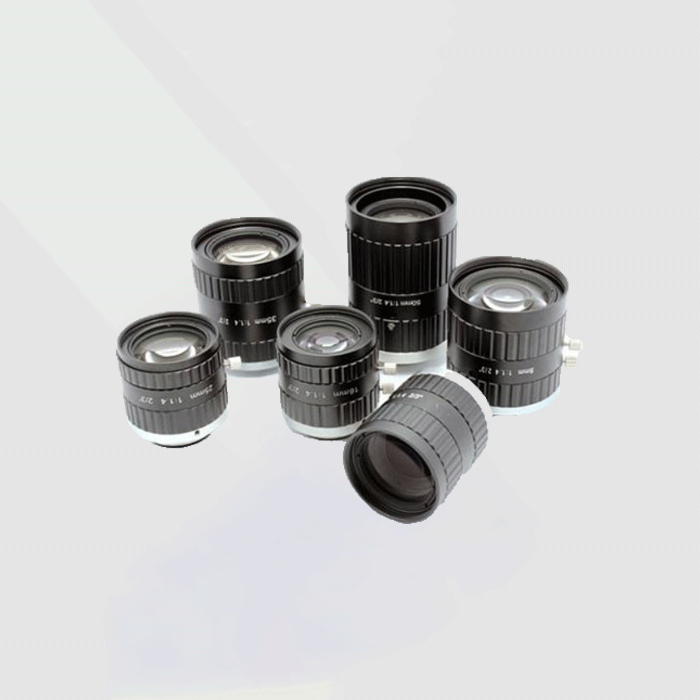
A machine vision lens is an optical element used in conjunction with cameras in machine vision applications. Machine vision lenses can be categorized into two types: fixed-focus lenses and zoom lenses. A fixed-focus lens has a constant focal length, and in practice, the imaging distance is adjusted by changing the distance between the camera and the object being measured. A zoom lens, on the other hand, allows for focal length adjustments, providing flexibility to focus on objects at varying distances.
II. Formula for Calculating the Focal Length of Machine Vision Lenses
The focal length of a machine vision lens is the distance from the lens to the imaging plane, usually measured in millimeters (mm). The formula for calculating the focal length for machine vision applications is: Focal Length (mm)=Object Distancef/number where "Object Distance" refers to the distance between the object being measured and the lens, and "f/number" indicates the aperture value. For example, if the object distance is 1 meter and the f/number is 2, the focal length would be 500 mm. This formula applies to both fixed-focus and zoom lenses.
III. Considerations for Selecting Machine Vision Lenses
When choosing machine vision lenses, several factors need to be considered to ensure the best imaging results:
-
Type of Lens: Select either a fixed-focus lens or a zoom lens based on the specific requirements of the application. Fixed-focus lenses are simpler but require adjusting the camera-to-object distance, while zoom lenses offer more flexibility in focusing on objects at different distances.
-
Sensor Size: Machine vision cameras come with different sensor sizes, so the lens must be suitable for the sensor size to ensure high imaging quality.
-
Working Distance and Field of View: Consider the size and distance of the object to be measured, as well as the required imaging area. These factors will help determine the appropriate lens for the application.
-
Aperture Value: The smaller the f/number, the less light enters the lens, which may require a longer exposure time for proper imaging. Conversely, a larger aperture value (smaller f/number) offers a shallower depth of field.
In summary, the focal length calculation for machine vision lenses is: Focal Length (mm)=Object Distancef/number
When selecting machine vision lenses, choose the appropriate type of lens, consider the sensor size, working distance, and field of view, and account for the impact of the aperture value to achieve optimal imaging results.
FALenses Technology specializes in providing machine vision core hardware. You can go to the official website of FALenses Technology at https://www.falenses.com/ for more information.