
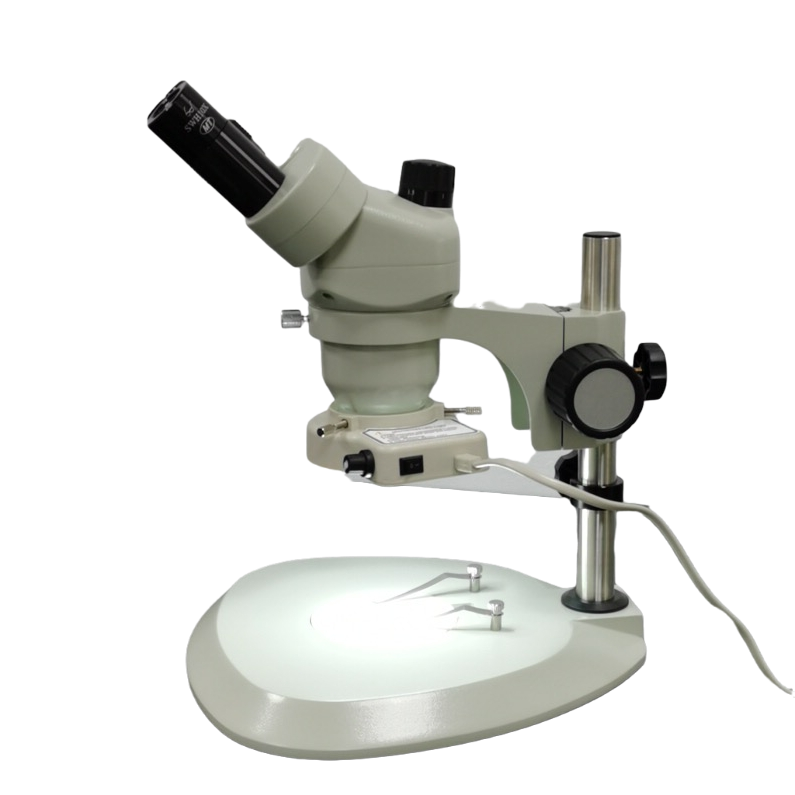
Customizing a microscope involves designing and manufacturing a microscope according to specific requirements. This type of microscope is tailored to meet unique research needs, such as observing specific samples' shape, size, and structure. Custom microscopes are typically highly adjustable, flexible, and precise.
Key Steps in the Customization Process
The customization process generally involves the following steps:
-
Determine the Microscope's Purpose and Required Features: This is achieved through discussions with the client and understanding their research domain. For instance, if the client needs to observe very small particles, a high-resolution microscope might be required.
-
Select Appropriate Optical Components and Materials: These components include objective lenses, eyepieces, filters, and light sources. Selecting the right optical components and materials is crucial for the microscope's performance and accuracy.
-
Design and Manufacture the Various Parts of the Microscope: This includes mechanical components, electronic components, and optical elements.
-
Test and Calibrate the Microscope: After assembly, the microscope must be tested and calibrated to ensure it meets the client's requirements and performance standards. Tests include resolution, clarity, sensitivity, and stability.
Important Details to Consider in Custom Microscopes
When customizing a microscope, several key factors should be considered:
-
Application Field: Different application fields require different types of microscopes, such as biology, materials science, chemistry, etc.
-
Magnification: The appropriate magnification depends on the samples being observed and the purpose of the study. In general, magnifications of 100–400x are common in biology, while higher magnifications are usually needed in materials science.
-
Light Source and Illumination System: The light source and illumination system are critical to the imaging quality of the microscope. Selecting a suitable lighting method is essential for the intended application.
-
Lenses and Objective Lenses: The choice of lenses and objectives affects image clarity and resolution. Customization should focus on selecting components that meet the application’s requirements.
-
Ease of Operation: The ease of operation is another consideration. Custom microscopes can include various attachments to improve user experience and functionality.
-
Cost: The price of a microscope is generally related to its configuration. Clients should choose a suitable configuration based on their budget.
Conclusion
Customizing a microscope requires careful planning and attention to detail. By understanding the specific needs of the application, selecting the right components, and considering factors such as magnification, illumination, lenses, ease of operation, and cost, a customized microscope can be designed to deliver optimal performance. Whether for biology, materials science, or another field, a well-designed custom microscope can be a valuable asset for research and analysis.
FALenses Technology specializes in providing machine vision core hardware. You can go to the official website of FALenses Technology at https://www.falenses.com/ for more information.