
Introduction
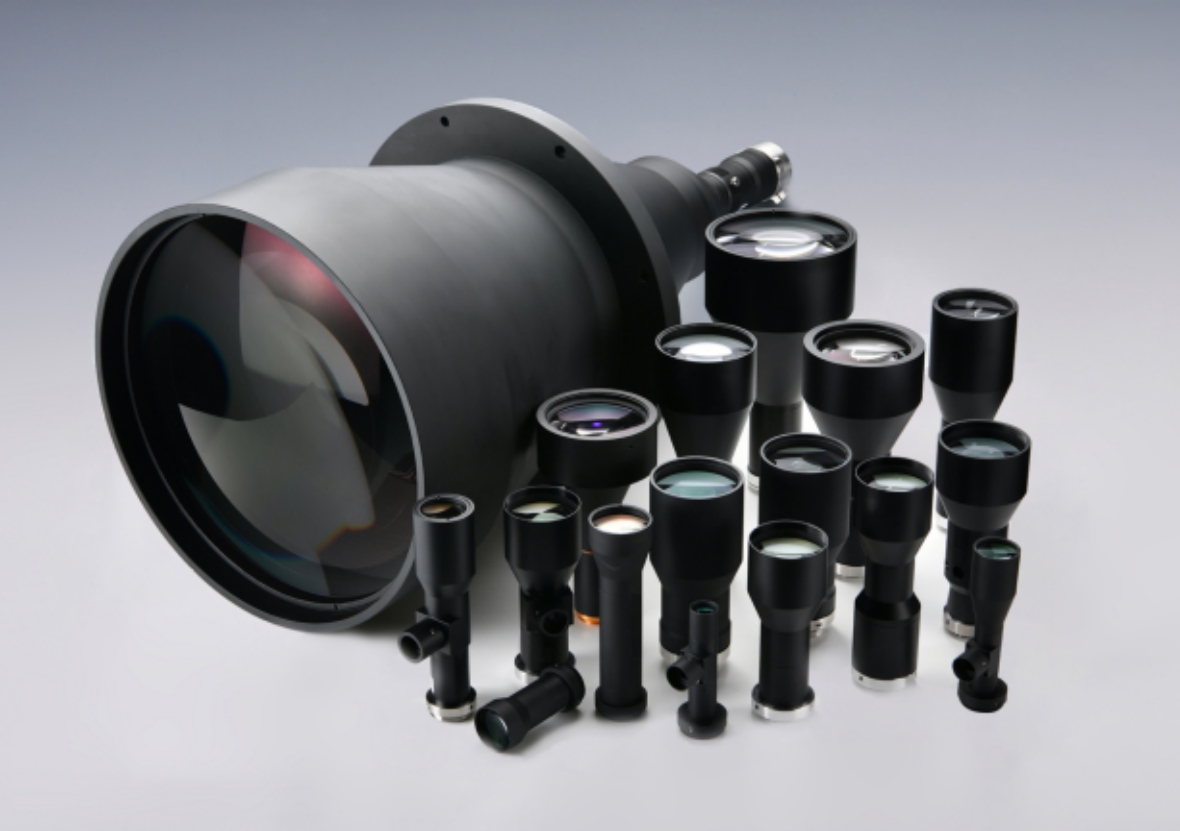
Industrial lenses are critical imaging components in machine vision systems. To ensure the system functions effectively, industrial lenses must meet specific requirements. At the beginning of the 21st century, with the widespread use of machine vision systems in precision inspection, standard industrial lenses proved inadequate for such applications. To address these limitations and meet the needs of precision inspection, telecentric lenses were developed.
What Are Telecentric Lenses?
Telecentric lenses are designed to correct the parallax issues found in traditional industrial lenses. They maintain a constant magnification within a specific object distance range, which is crucial when the objects being measured are not on the same plane. Due to their unique parallel optical path design, telecentric lenses have become popular in machine vision applications where lens distortion must be minimized.
Principles of Telecentric Lenses
Telecentric lenses can be classified into two types based on their optical design:
-
Object-Side Telecentric Lenses: In this design, the aperture stop is placed at the image-side focal plane, causing the object-side chief rays to be parallel to the optical axis. This arrangement eliminates parallax errors caused by inaccurate focusing on the object side.
-
Image-Side Telecentric Lenses: In this design, the aperture stop is located at the object-side focal plane, causing the image-side chief rays to be parallel to the optical axis. This arrangement eliminates measurement errors due to focusing inaccuracies on the image side.
Applications of Telecentric Lenses
Telecentric lenses find their applications in various industries and precision measurement fields. Some key applications include:
-
Precision Linear Measurement: Telecentric lenses are used for precise linear measurements where observation must be from a standard frontal view, without considering the object's side profile. This is especially useful when mechanical components cannot be precisely positioned and when measurement distances vary.
-
Precision Optical Measurement Systems: In precision optical measurement systems, traditional optical lenses face limitations, such as image distortion, measurement errors due to perspective, and uncertainty caused by inappropriate light sources. Telecentric lenses can effectively reduce or eliminate these issues, making them indispensable components in precision optical measurement systems.
Conclusion
Telecentric lenses are valuable in machine vision and precision measurement applications, offering consistent magnification and minimizing distortion. Their unique design allows them to overcome the limitations of traditional lenses, providing reliable and accurate measurements. By incorporating telecentric lenses, industries can achieve higher precision and accuracy in their inspection and measurement processes.
FALenses Technology specializes in providing machine vision core hardware. You can go to the official website of FALenses Technology at https://www.falenses.com/ for more information.