
To achieve clear images with industrial zoom lenses, it's essential to understand key concepts such as focusing, zooming, auto iris, and telecentric lens design. Below are the critical points to consider when using industrial zoom lenses:
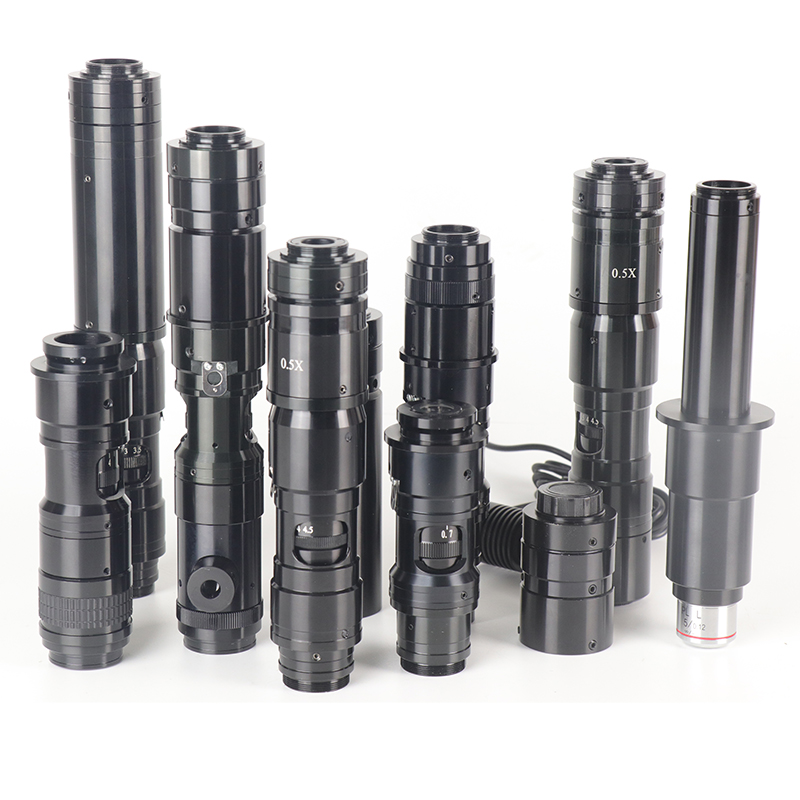
1. Focusing
In industrial zoom lenses, objects at different distances have varying image distances, resulting in the need to adjust the focusing plane. To get a clear image, the imaging plane must align with the camera's sensor. This adjustment process is known as focusing.
Whole Group Movement
In this focusing method, the entire lens assembly is moved back and forth to adjust the imaging plane's position. When the imaging plane coincides with the camera's sensor, the image becomes clear. This focusing method does not alter the lens's optical structure or focal length.
Single Group Movement
Another focusing method involves adjusting a single group of lenses within the lens assembly to move the imaging plane and achieve clear focus. This approach can slightly alter the lens's focal length but does not substantially change the overall optical structure.
2. Zooming
Zooming allows for adjusting the lens's focal length over a wide range (often measured in terms of zoom ratio, such as 4x zoom, indicating that the maximum focal length is four times the minimum focal length). Industrial zoom lenses are adaptable, allowing users to switch between "wide scene" and "close-up" imaging.
Zooming is achieved by relatively moving two (or more) groups of lenses within the optical system, altering the system's focal length without moving the imaging plane. This change in focal length affects the magnification of the image while maintaining image clarity.
3. Auto Iris
Adjusting the lens's aperture involves changing the iris's size, affecting the amount of light entering the lens and, in turn, the brightness of the imaging plane. This adjustment can be done manually or through motorized mechanisms, enabling automatic iris adjustment.
4. Telecentric Industrial Zoom Lenses
Telecentric optical paths can be classified into two types: object-side telecentric and image-side telecentric.
Object-Side Telecentric
In this design, the aperture stop is located at the lens's object-side focal plane, with the entrance pupil at infinity. This optical path ensures that the chief rays entering the object side (in red) are parallel to the optical axis.
Image-Side Telecentric
Here, the aperture stop is at the image-side focal plane, with the exit pupil at infinity. This optical path ensures that the chief rays exiting the image side (in red) are parallel to the optical axis.
These two telecentric optical paths have unique applications, especially in measurement instruments. Object-side telecentric lenses are not sensitive to changes in object distance, while image-side telecentric lenses are sensitive to changes in imaging distance. Both types of telecentric lenses offer unique advantages, depending on the specific application.
Conclusion
By understanding these key knowledge points for industrial zoom lenses, users can achieve clear and accurate images in various applications. Proper focusing, zooming, auto iris control, and telecentric lens design are critical for optimal performance in industrial settings.
FALenses Technology specializes in providing machine vision core hardware. You can go to the official website of FALenses Technology at https://www.falenses.com/ for more information.