
Light sources can be divided into thermal light sources and cold light sources according to the way they emit light .
Thermal light sources, also known as thermal radiation light sources, are light sources excited by thermal energy. Incandescent lamps and halogen lamps are both thermal light sources . The light emitted by this type of light source has a continuous spectrum, of which only a small part is within the visible light spectrum. Therefore, the conversion efficiency of this type of light source is generally lower than that of a cold light source, and most of the energy is dissipated in the form of heat.
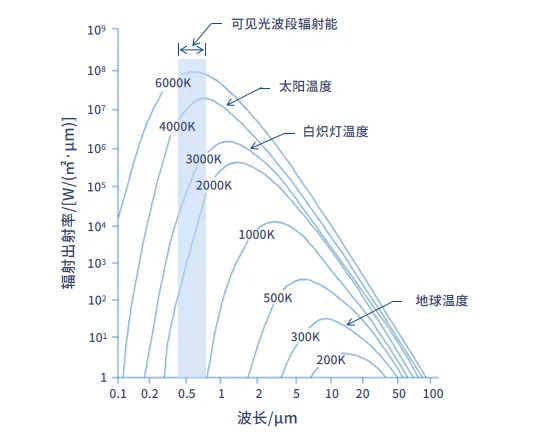
Cold light sources are light sources that are excited by chemical energy, electrical energy, etc. Since they do not rely on thermal energy to work, their working temperature is lower than that of thermal light sources. Fluorescent lamps, LEDs, etc. are all cold light sources . The working mode of this type of light source is usually that the object is excited from the ground state to a higher energy state by external forces, and then the high-energy state electrons fall back to the ground state, while releasing energy in the form of light. The spectrum of cold light sources is basically concentrated in a few limited ranges, so the luminous efficiency is very high.
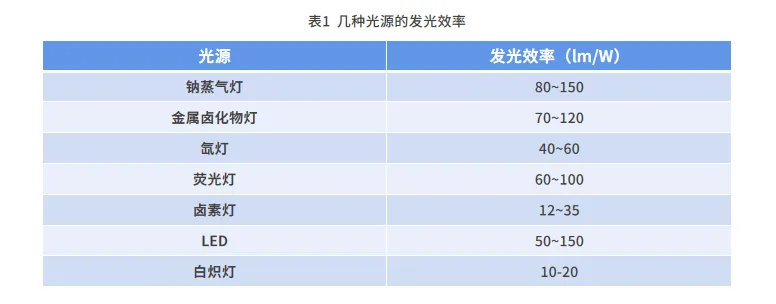
This article briefly introduces the following light sources:
led
LED is a small and highly robust light source. The half-width of the wavelength of the cold light it emits is about 30nm, which means that its light source is almost monochromatic. The luminous efficiency of LED lamps is as high as about 200lm/W. The light source has good monochromaticity, low power consumption and long service life. The life of LED varies greatly depending on the color, measurement conditions, environmental conditions, design, manufacturing, etc. For monochrome LEDs, the service life is approximately between 100,000 and 200,000 hours, while the life of some white LEDs is relatively shorter. The color of the light emitted by the LED depends on the pn conversion substrate inside the LED, so there are LEDs of different colors.
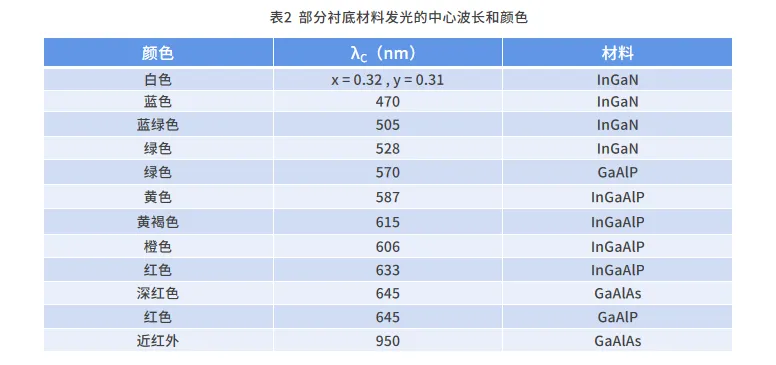
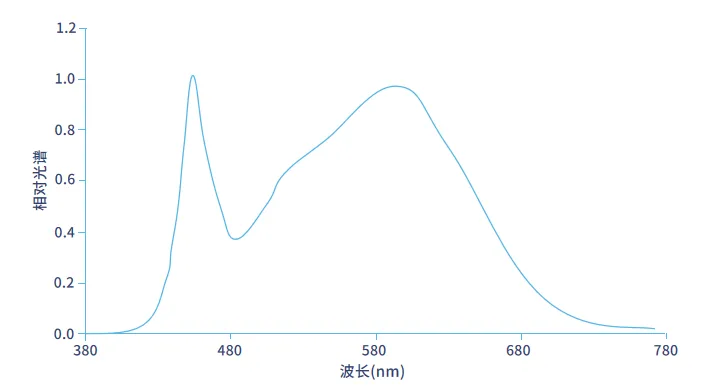
White light LEDs usually produce white light by mixing several luminescent materials. Currently, white light LEDs are divided into polycrystalline and monocrystalline types. Polycrystalline white light LEDs use two or more complementary 2-color LEDs or mix 3 primary color LEDs to form white light. Monocrystalline white light LEDs use a single-color LED plus corresponding phosphors, and use LEDs to excite the phosphors to emit light. Monocrystalline white light LEDs have two more common ways of emitting light. One way is that blue LEDs excite yellow phosphors to produce white light, and the other way is that ultraviolet LEDs excite RGB three-wavelength phosphors to produce white light. If LEDs are pulsed for a short time, they can work at up to 10 times the current overload to produce light with up to 10 times the emission intensity, and can be used in situations where a short-term high-intensity light source is required.
LED lights are very suitable for machine vision applications due to their long service life, insensitivity to vibration, good monochromaticity, short response time, flexible light source shape, and high .
Sodium vapor lamp
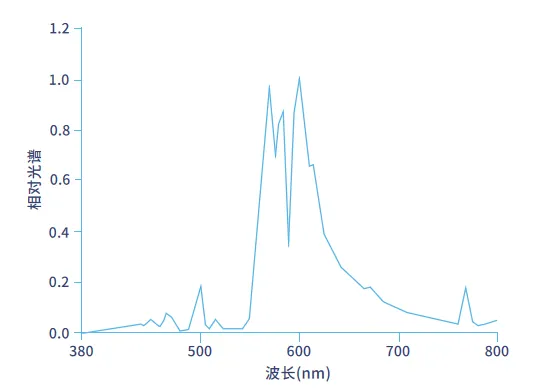
Metal vapor lamps such as sodium vapor lamps have high luminous efficiency and can emit brighter light at the same power. Various types of metal vapor in metal vapor lamps are stimulated by fast-moving electrons to emit light, and different metal vapors will stimulate light of different wavelengths. As shown in Figure 3, the spectrum of sodium lamps is concentrated between 560 and 640nm, mainly yellowish light, with poor color rendering, and is not suitable for use in the field of machine vision.
Xenon lamp
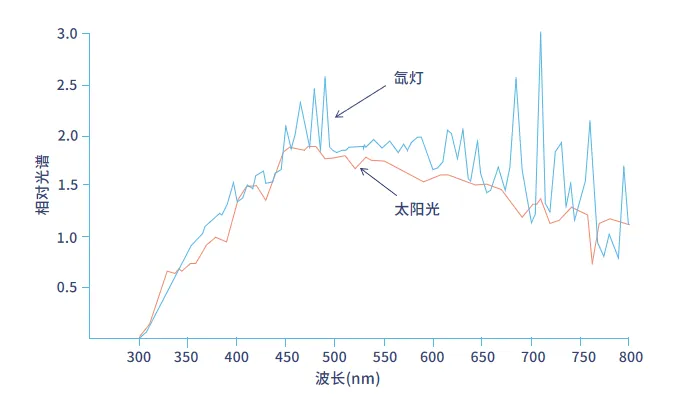
Xenon lamps can be excited by pulse power to produce high-brightness instantaneous flashes, and their radiation intensity is second only to lasers. The spectrum of xenon lamps basically covers the ultraviolet, visible light, and infrared bands, and the spectrum curve is close to the spectrum of sunlight. It can emit balanced white light with good color rendering . Pulse xenon lamps also have the advantages of high stability and long working life , and the number of flashes can reach about times.
However, the price of xenon lamps is higher than that of LEDs. At the same time, continuous high-intensity pulse excitation also places high demands on the power supply. At the same time, the structure is relatively large and bulky, and not flexible enough . Therefore, xenon lamps are mainly used in fields such as high-speed photography and color analysis, and are less used in the field of machine vision.
Fluorescent lamp
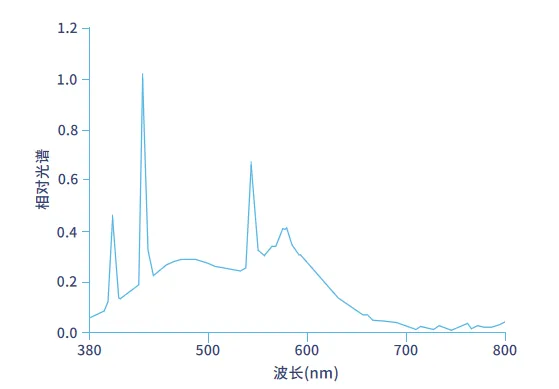
Fluorescent lamps are low-pressure mercury lamps that use low-pressure mercury vapor to release ultraviolet light when powered on, causing the phosphor to emit visible light. Therefore, they are low-pressure arc discharge light sources.
Fluorescent lamps are driven by alternating current (AC), and the flicker frequency of fluorescent lamps is twice the frequency of AC. In order to reduce the brightness changes and discomfort to the human eye caused by flickering, high-frequency ballasts are usually used to increase the frequency of AC, thereby increasing the flicker frequency of fluorescent lamps. Even if high-frequency ballasts are used to increase the flicker frequency, the flicker frequency of fluorescent lamps may still interfere with camera shooting, especially in high-speed shooting scenes.
The lighting system is a critical part of machine vision applications. Accurate machine vision applications cannot be separated from the assistance of optics. Differences in light sources can easily directly affect the quality of the generated image, and thus affect the integrity of the entire scanning result. Excellent optical engineers must have a solid grasp of the basic knowledge of light sources in order to better apply it in practice.
来源:Inovance Technology Planet