
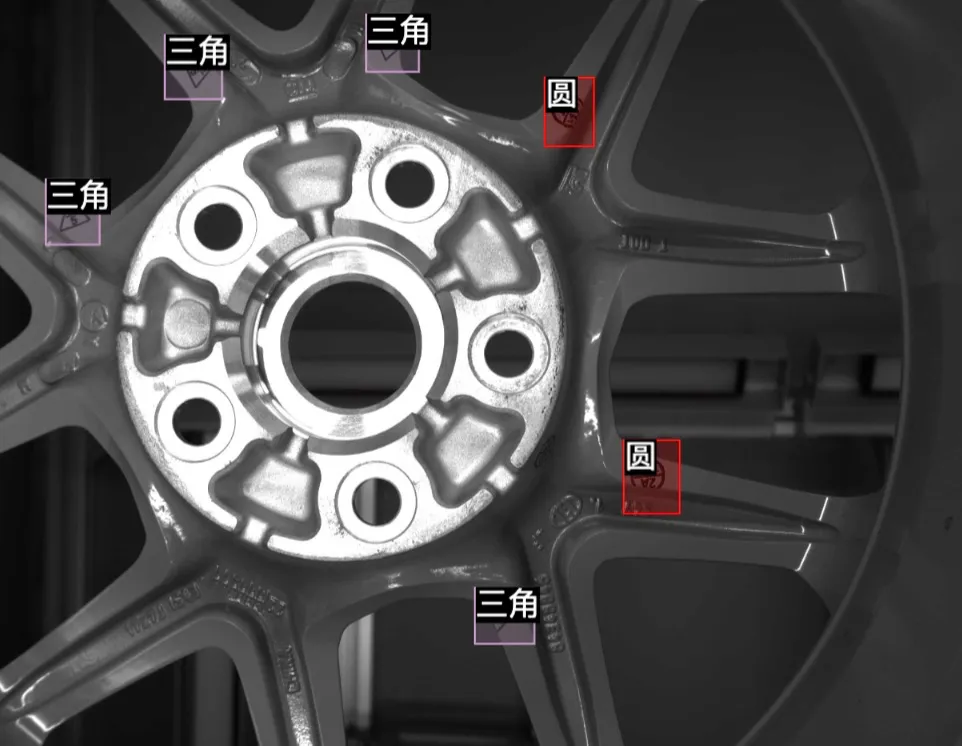
In the automotive manufacturing industry, wheels are an important part of the car, and their quality is directly related to the safety and service life of the car. In order to ensure that the quality of the wheel hub meets the standards, the traditional manual inspection method can no longer meet the needs of the production line, so AI vision software is introduced to realize the automatic detection of wheel hub defects.
1. Defect types: Through AI vision software, comprehensive detection of wheel surface defects, geometric defects and color difference defects can be achieved.
1. Surface defects: such as cracks, scratches, bubbles, etc.;
2. Geometric defects: such as deformation, deformation degree not meeting the standards, etc.;
3. Real-time: Real-time detection is required on the production line, which poses challenges to algorithm performance and hardware requirements.
3. Detection accuracy: High-precision detection is the key, usually reaching an accuracy rate of more than 99% to ensure that no missed detections and the false detection rate is less than 1%.
In order to ensure the stability and reliability of the detection effect, the equipment, environment and parameters on the production line need to be standardized, and calibrated and adjusted regularly. At the same time, the detection results should be collected and analyzed in a timely manner. For false detection or missed detection, the algorithm or equipment parameters need to be adjusted in time to continuously optimize the detection effect.