
Preface
The “smart eyes” of industrial robots
As early as the 1980s, the National Bureau of Standards of the United States predicted that 80% or even 90% of inspection tasks would be completed by visual measurement systems. This prediction has basically become a reality. In recent years, with the rapid development of machine vision technology, the speed, accuracy and intelligence of machine vision technology have been widely used in all walks of life in modern industry.
Moreover, in the current context of the Industrial 4.0 era with intelligent manufacturing as the core, the strategic deployment of Made in China 2025 has gradually deepened, and the industrial robot industry market has shown explosive growth momentum, and the machine vision system that serves as the "eyes" of industrial robots has also made an indelible contribution.
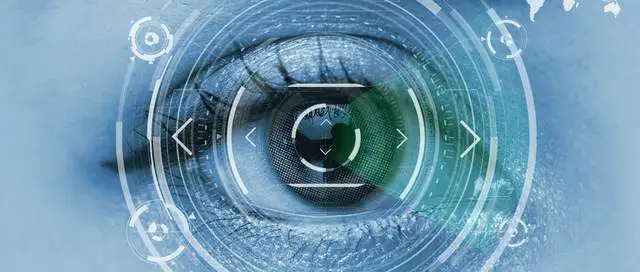
The machine vision system is a non-contact optical sensing system that integrates both software and hardware and can automatically obtain information from the captured images or generate control actions.
In short, it is to use computers to simulate the visual function of the human eye, extract information from images or image sequences, process and understand them, and ultimately use them for detection, measurement and control.
A typical industrial machine vision system uses a camera to collect image information of the target under test, and then converts the analog image information into a digital image signal and transmits it to the digital image processing system of the host computer. The processing system will calculate the position and shape of the target under test based on the pixel distribution, brightness, landmark points, color and other information of the image, and finally control the drive actuator to respond based on the information obtained from the test.
Currently, machine vision has been applied in fields such as agricultural product sorting, medical imaging, product packaging inspection, and industry.
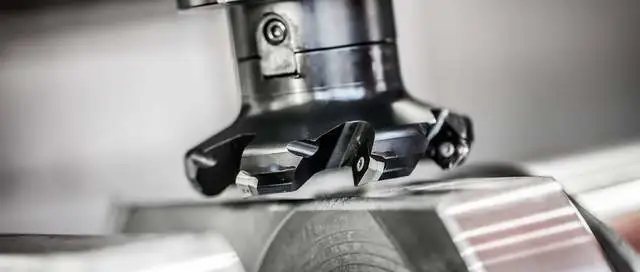
Machine vision is widely used in the industrial field and has three main functions: visual measurement, visual guidance and visual inspection.
Visual measurement is used for parts with high precision requirements, which are at the millimeter level or even the micron level. It cannot be completed by human eyes and must be completed by machines. For example, the size of high-precision threaded holes needs to be measured by machine vision to ensure the clearance and precision of the connection.
Vision guidance requires that machine vision can quickly and accurately find the parts to be tested, confirm their positions, and guide the robot arm to grasp them accurately. For example, vision-guided random grasping can obtain a 3D image by scanning the randomly distributed parts in the toolbox. Pattern recognition is used to obtain the best point for the robot arm to grasp the workpiece in the 3D image, and guide the grasping to achieve automated production.
Visual inspection uses a machine vision system to detect whether products on the production line have any quality problems, and to test their aesthetics, comfort, and performance. It is the link that replaces the most manual labor. For example, both domestic and foreign countries have realized the use of machine vision to detect the geometric shape and surface defects of potatoes, and then grade the potatoes according to these characteristics.
Machine vision has greatly improved the flexibility and automation of industrial production, and can complete some tasks that are difficult to complete manually in dangerous working environments. It has greatly reduced the use of manual labor in large-scale production and improved and ensured the quality of production.
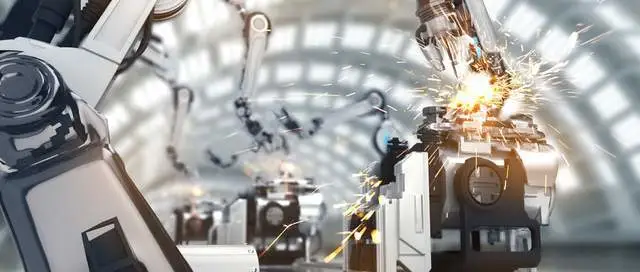
It is worth pointing out that machine vision technology has been widely used in the automobile industry, a typical representative of modern industry.
As one of the world's largest and most important industries, the automobile manufacturing industry has a history of more than 100 years. Compared with other manufacturing industries, the automobile manufacturing industry has several typical characteristics: huge output and still maintaining rapid growth; fast model replacement speed; very complex manufacturing process. The application of machine vision technology in the automobile manufacturing industry has greatly improved the operation quality and efficiency of the process and reduced labor intensity.
It has been successfully applied to many domestic and foreign automobile OEMs, including automatic detection of vehicles and parts, three-dimensional positioning of parts, body assembly/processing, parts traceability, etc. The application of machine vision technology has run through the entire automobile body manufacturing process, including the development from initial raw material quality inspection to 100% online measurement of automobile parts, and then to control the welding, gluing, punching and other process processes in the manufacturing process, and finally to check the quality of the body assembly and the whole vehicle leaving the factory.
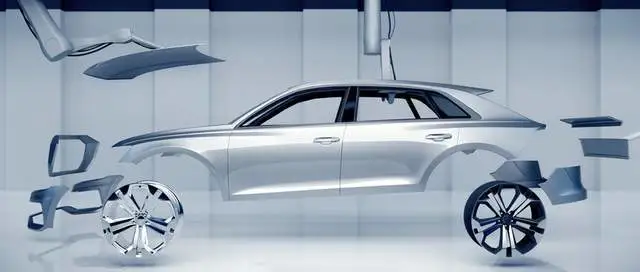
At present, machine vision has been widely used in various fields of modern industry, and its development space in the future will be even broader. Machine vision technology will surely become the "wise eye" that guides a higher, faster and more stable automated industrial era.
However, it must be pointed out that machine vision technology is also restricted by certain factors in modern industrial applications, and targeted improvements and upgrades are needed in the future. In addition, the current intelligence level of computer software is far from enough. The deep learning neural network, which is very popular in the field of computer vision, has few successful applications in the field of machine vision. When the target objects are changeable, the features are complex, and the number of samples is insufficient, deep learning cannot be used, and we have to return to the traditional old way. Considering the strict requirements of real-time performance, machine vision especially needs a new intelligent method that is widely used in most fields.
The industrial world basically uses three-dimensional components, and two-dimensional imaging is, after all, a pathological data collection of the actual situation in three-dimensional space. There will be more and more projects and applications around three-dimensional machine vision inspection, measurement, robot guidance, etc., and three-dimensional visual inspection will be more used in the field of industrial production.
The development of machine vision will also reach a climax in many other civilian fields. There will be various new applications in modern manufacturing, medical treatment, electronics, warehousing and other fields, which will promote the development of intelligence in the new era. Machine vision hardware systems will also develop in the direction of embedded systems, with increasingly higher computing efficiency and intelligence.